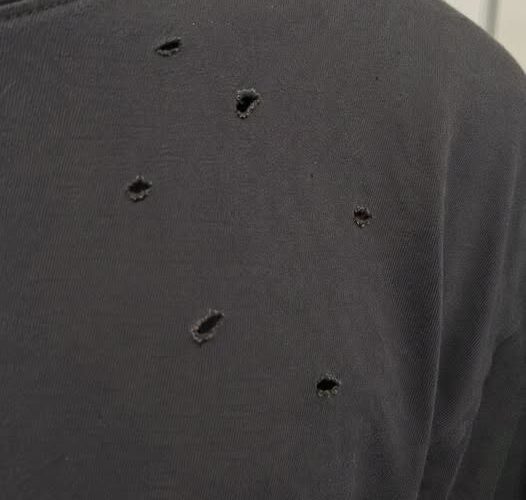
Holes in your favorite clothes are extremely annoying. You often only notice them after washing them and immediately suspect the washing machine. However, the causes are much more diverse.
Here are the most common reasons for holes in clothes and simple tips to protect your wardrobe.
Pests: Classic textile pests
When small, irregular holes appear, especially in clothes made from natural fibers (wool, silk, cotton), the culprit is usually an insect.
Clothes moth: It is not the moths themselves that eat the holes, but their larvae. They feed on keratin, which is found in animal hair (wool, cashmere, fur).
Carpet beetles: Their larvae also love textiles and leave similar damage as moths.
How to avoid them:
Hang only clean clothes: Dandruff, sweat and skin oils attract pests like a magnet. Wash worn clothes before storing them for a long time (e.g. during seasonal changes).
Natural repellents: Use sachets of lavender, cedar wood or cloves in your wardrobe. The scent repels moths.
Vacuum bags: Store winter clothes in airtight plastic bags in the summer.
Friction and mechanical stress (the “T-shirt classic”)
You know those typical small holes on the front of a T-shirt? This is usually not caused by moths, but by mechanical friction.
Belt buckles and trouser buttons: When you walk or sit, the delicate fabric of your top is constantly rubbing against a hard surface (e.g. the edge of a table or kitchen counter).
Seat belts and handbags: Friction from seat belts or heavy bag straps can also rub fabric.
How to avoid it:
Tuck your shirt in: When working at a desk, tuck your shirt loosely into your waistband.
Rethink your belts: Choose belts with flat buckles or skip them altogether if you’re wearing delicate cotton shirts.
Washing mistakes
A washing machine is like a mechanical tractor for hardwood fabrics if you’re not careful.
Open zippers and bra hooks: Exposed teeth from zippers, Velcro, or bra hooks act like tiny knives in the drum, tearing holes in other clothes.
Overloaded drum: If the washing machine is too full, the laundry will be pressed extremely hard against the drum wall. Sharp-edged holes in the drum (or foreign objects such as coins and bra underwires) can damage the fabric.
Spin speed too high: Delicate fabrics do not tolerate spinning at 1400 rpm. The fibers simply tear.
How to avoid this:
Close the fasteners: Close all zippers and fasten buttons and bra hooks before washing.
Use mesh laundry bags: Always wash delicate clothes, bras and clothes with sequins or zippers in separate mesh laundry bags.
Check the drum: Occasionally run an old pair of stockings through the empty drum of the washing machine. If it gets stuck, there is a sharp edge that needs to be smoothed out.
Chemical influences
Sometimes we unknowingly chemically weaken the fibers, causing them to simply tear during the next wash.
Deodorants and perfumes: Harsh aluminum salts in deodorants combined with sweat can make underarm fibers brittle.
Bleaches and laundry detergents: Stain removers left on too long or not rinsed out enough will eat through fabric.
How to avoid it:
Allow deodorants to dry completely before wearing.
Follow stain treatment instructions carefully and don’t leave them on for too long.
Summary: Quick Check
Symptom Probable Cause Immediate Action
Hole in the stomach area (shirts) Rubbing against belt/table Tuck your shirt in, wear smooth belts
Irregular holes in closet Moths or carpet beetles Clean closet, use lavender/cedar