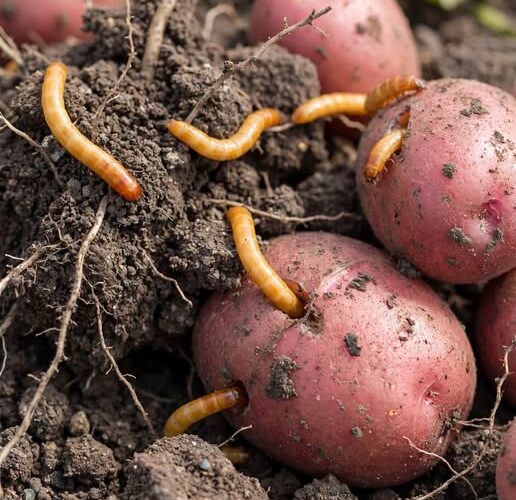
Wireworms – the larvae of the potato beetle – are among the most problematic pests in potato cultivation. These hard, yellow-orange “wireworms” bore through the tubers, making them not only inedible, but also promoting the formation of mold and rot. Since they live underground, controlling them is a long battle.
If you don’t want your autumn harvest to turn into a useless pile of mulch, rely on these four proven and effective methods.
Agrotechnical method: Liming and intensive tillage
Wireworms thrive in acidic, heavy and compacted soils, such as those often found on former grasslands.
pH adjustment: If your soil is acidic, add dolomite lime to the beds in the fall. By raising the pH, you create an unfavorable environment for wireworms. 1. Regular soil loosening: Regular turning and removing weeds from the beds (especially in spring and autumn) brings the larvae and eggs to the surface. There they are immediately eaten by birds or destroyed by the sun and frost.
Biological control: Using nematodes
For those looking for an environmentally friendly and highly effective method without chemicals, the answer is natural enemies of wireworms.
Parasitic nematodes: Beneficial nematodes are commercially available (e.g. from the genera Heterorhabditis or Steinernema).
Mode of action: The nematodes are incorporated into moist soil together with irrigation water. They seek out wireworm larvae, penetrate them and infect them with bacteria that kill them within a few days. They are completely harmless to humans, pets and plants.
Targeted Green Manure (Mustard and Buckwheat)
Choosing the right plants to plant before or after potatoes in your garden can literally starve wireworms or drive them away completely.
White mustard: Wireworm larvae hate the substances (glucosinolates) released into the soil by mustard roots. Sowing mustard in the fall and incorporating it into the soil in the spring will cause wireworms to seek out other habitat.
Buckwheat: Buckwheat is indigestible to wireworms. A two-year cycle of growing buckwheat in an infested bed can keep the pest population to a minimum.
Homemade Traps: Potato Bait
This method requires some effort, but is great for smaller gardens and raised beds where you don’t want to use commercial products.
How to make a trap: Cut a large, healthy potato (or carrot) in half. Stick a wooden skewer into each half as a handle and marker.
Application: Bury the potato halves about 5–10 cm deep in the soil (cut side down) in areas where you plan to plant potatoes or have already planted them.
Harvesting: Every 2–3 days, pull the trap out by the skewer, collect the larvae buried in the bait (and dispose of them), and rebury the trap.
Final tip: Wireworms live in the soil for 3–5 years before they develop into beetles. Success therefore depends on combining and repeating these methods. Never let the soil become overgrown with thistles – their roots are a favorite food of wireworms and will reliably attract them to your garden.
Have wireworms appeared for the first time after digging up an old lawn, or have you been battling them in your garden for some time?