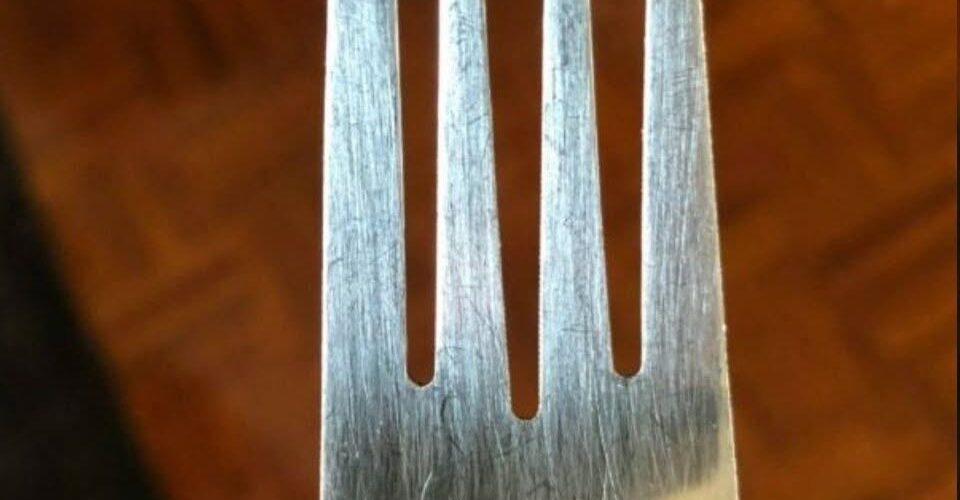
You may have noticed this at a dinner party or in a restaurant: one of the forks on the table has a noticeably wider tip, slightly broken or damaged at the end. No, this isn’t a manufacturing defect, nor is it the result of someone dropping it.
This is the cutting fork (often also known as a dessert fork or fish fork in the restaurant industry), which has this feature for purely practical reasons.
Why is the tip different?
This special shape serves an important function, especially with desserts or fish, where a traditional table knife isn’t used.
Cutting Mechanism: The wider, reinforced left tine (for right-handed users) functions like a knife blade. This allows you to effortlessly cut through hard crusts, puff pastry, or cakes with the edge of the fork without bending it.
Split notch: This small notch on the side or tip of fish forks makes it easier to separate the flesh from bones and skin. On dessert forks, it provides a sharper edge for cutting through harder ingredients (like nuts or chocolate icing).
How do they differ?
Depending on what you’re eating, there are two main types:
Fork type: What does it look like? What is it used for?
Dessert/Pastry fork: Smaller, with 3 or 4 tines, the left tine being thicker and beveled. Used for cutting cakes, tarts, and desserts without a knife. Fish fork: Wider, flatter, resembling a flat spatula, often with a deeper notch. Used for separating delicate fish flesh from the bones. Interesting historical fact: This design dates back to a time when etiquette strictly forbade the use of a knife for certain foods (like soft fish or pastries) as it was considered unseemly. That’s why silversmiths invented a hybrid tool – a piece of cutlery that both pierces and cuts.
So the next time you’re served a fork with an unusual tip for cheesecake or salmon, you’ll know you’re holding a thoughtfully crafted piece of dining culture! Have you ever noticed this detail on cutlery before?