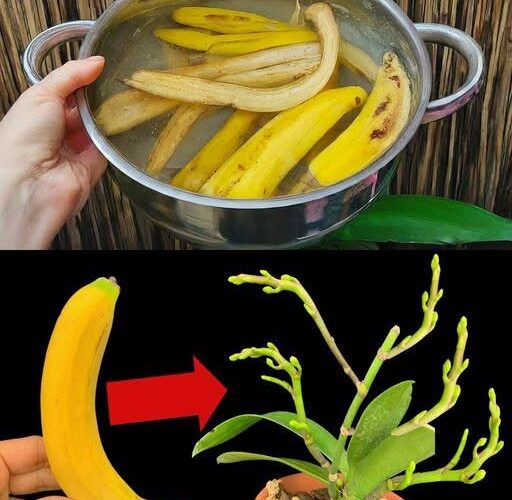
This is the next viral video promise! Behind this mysterious request lies an extremely popular DIY gardening tip: making banana peel fertilizer (often called “banana tea”).
If you put banana peels in a bottle of water and leave them for a few days, here’s what happens:
What happens in the bottle: The banana peel slowly decomposes in the water. In the process, the abundant minerals in the peel are released into the water. The result is a free, all-organic liquid fertilizer.
Banana peels are true nutrient powerhouses for plants because they contain:
Potassium: Strengthens plant tissue, makes it resistant to frost and pests, and promotes water transport.
Magnesium: Important for chlorophyll production (the green pigment in leaves) and photosynthesis.
Phosphate: Supports flowering and root growth.
That’s why this homemade fertilizer is especially popular for flowering houseplants (like orchids or geraniums) as well as for tomatoes and peppers in the garden, which have a high potassium requirement.
The right instructions (to prevent mold):
To ensure your experiment in the bottle is a success and doesn’t turn into a smelly mess, keep a few things in mind:
Preparation: Cut the banana peel into small pieces so the nutrients dissolve into the water more quickly.
Soaking: Place the pieces in a bottle or a large glass and fill it with water.
Waiting time: Let it stand for 2 to a maximum of 3 days. Shake the bottle occasionally. Caution: If you let it stand for too long, the peel will begin to ferment, which can produce an unpleasant odor.
Sifting: Pour the water through a sieve to separate the peel residue from the fertilizer water. You can add the residue to your compost or dig it directly into the potting soil.
How to use it: Dilute the “banana tea” 1:5 with regular water and give it to your plants.
Important organic tip: Be sure to use organic bananas for this trick. Conventional bananas are heavily sprayed with pesticides and fungicides. These chemicals adhere to the peel, then end up in your watering can and ultimately in the soil of your houseplants or vegetables.