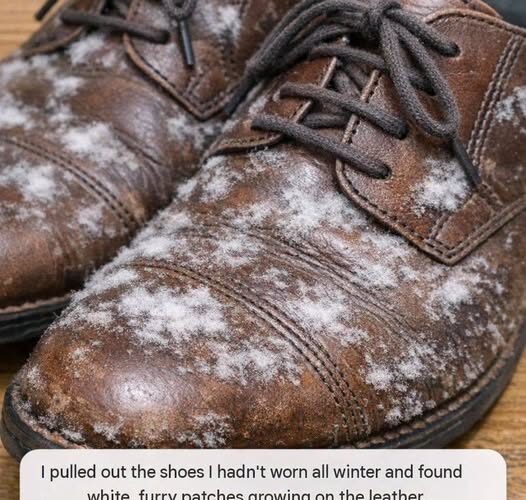
Those white, furry patches are white mold (Penicillium or Aspergillus spores). Leather is an organic material full of proteins and fats, making it an ideal food source for mold when stored in a dark, humid, or stagnant area over the winter.
Mold vs. Fatty Bloom
Before cleaning, rule out fatty bloom (fat specks that migrate out of the leather):
- Furry / Elevated texture: If it has a raised, velvet-like or hairy structure, it is mold.
- Wipe test: Mold wipes off easily with a damp cloth and smells distinctly musty. Fatty bloom melts away if you lightly run a warm hair dryer over it.
How to Clean and Restore Your Shoes
1.Brush Off Spores Outdoors:Do not clean inside your living space.
Take the shoes outside to prevent mold spores from spreading through your home. Use a soft nylon brush or stiff dry rag to gently brush away the surface growth. Wear a mask if you are sensitive to mold.
2.Wipe with Disinfecting Solution:
Mix equal parts rubbing alcohol (isopropyl) and water. Dampen a microfiber cloth with the mixture (do not soak the leather) and thoroughly wipe down the entire shoe, including seams and soles, to kill the fungal spores.
3.Air Dry Completely:
Leave the shoes to dry naturally in a well-ventilated, warm area out of direct sunlight or intense direct heat, which can shrink or crack leather.
4.Condition the Leather:
Alcohol dries out leather. Once fully dry, apply a dedicated leather conditioner or balm to restore flexibility and protect against future moisture damage.
Prevention Tips
- Control Humidity: Store shoes in a room with relative humidity below 50%.
- Airflow: Avoid sealed plastic containers or dark, unventilated closet floors. Use breathable cotton shoe bags instead.
- Silica Gel: Place silica gel packets inside the shoes during long-term seasonal storage.