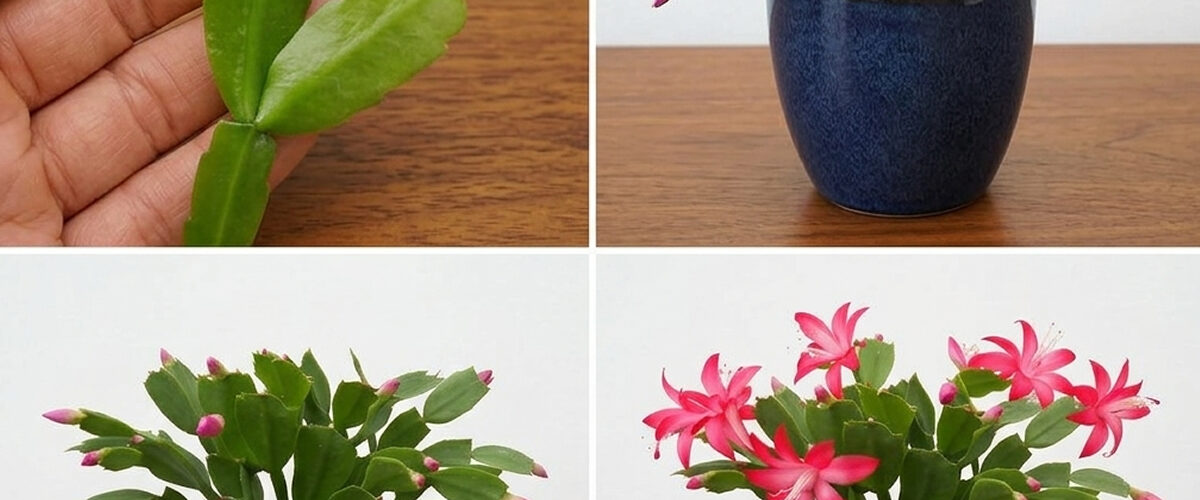
The Christmas cactus (Schlumbergera) isn’t actually a desert plant, but a tropical inhabitant that grows on trees in its native habitat. Therefore, it needs slightly different care than its spiky relatives in the sand.
Here’s the “simple trick” florists use to guarantee a blooming season:
The trick: Targeted neglect (short-day treatment)
For a Christmas cactus to develop buds, it needs a cold stimulus and complete darkness. Starting around September/October, you should do the following two things:
Light deprivation: The plant needs at least 12 to 14 hours of complete darkness per day for about 6 weeks. Even the light from a streetlamp or a reading lamp in a room can disrupt its cycle.
Cool temperatures: Place the plant in a cooler location (approx. 12–15°C). This signals to the plant that it’s time for the reproductive phase (flowering).
More professional care tips
Besides the dormancy period, there are three golden rules to ensure the plant not only blooms but also stays healthy:
Don’t move it: As soon as the first tiny buds appear, the cactus is very sensitive. If you turn it now or move it to a different spot, it will often drop the buds in protest.
Water correctly: Avoid waterlogging! Florists recommend letting the surface of the soil dry out before watering again. During the flowering period, the soil should never dry out completely.
High humidity: Since it comes from the rainforest, it loves to be misted occasionally with lime-free water – especially when the air is dry from heating in winter.
Summary of Needs
Factor: During dormancy (autumn) During flowering (winter)
Light: Dark period (14 hours of night) Bright, but no direct sunlight
Temperature: Cool (12-15°C) Room temperature (18-20°C)
Water: Very little Regularly (moist, not wet)
A small side note: Many people confuse the Christmas cactus with the Easter cactus. The Christmas cactus has pointed protrusions on the leaf segments, while the Easter cactus has more rounded, wavy leaf edges. The trick with the dark period works for both!