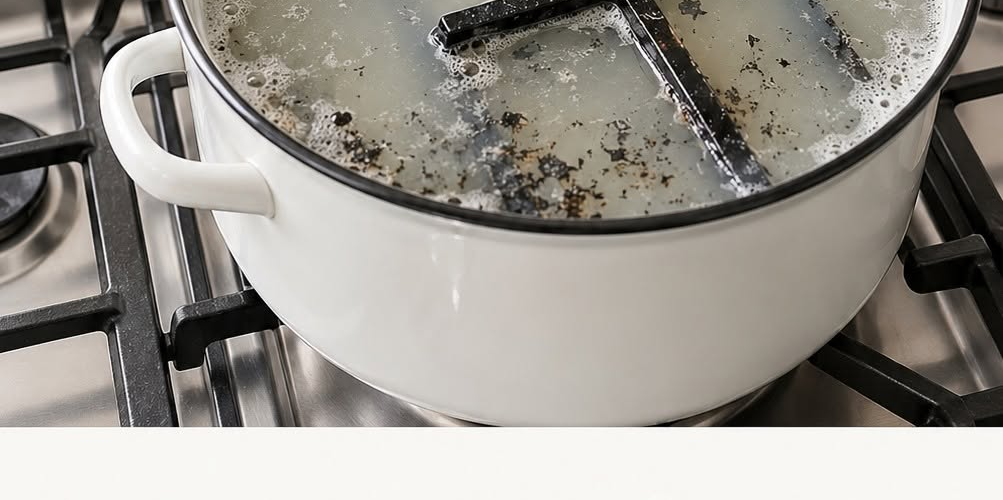
That’s right – burnt-on grease and carbon residue on cast iron or enameled gas stove grates are extremely stubborn. Since regular dishwashing liquid only dissolves the grease on the surface, and scrubbing with a wire brush often requires effort (and can scratch the surface), the best solution is usually chemical or home remedies that soak up and break down the grime.
Here are the three most effective methods for getting your stove grates clean again without much scrubbing:
Ammonia/Salmon Method (Tip for Maximum Efficiency)
This method requires no scrubbing, but uses steam to loosen the burnt-on carbon.
Follow these steps: Place the grates in a tight, sealed garbage bag (or an extra-large freezer bag). Add about 50–100 ml of ammonia solution (available at drugstores or hardware stores).
Important: The racks do not need to be submerged in ammonia – the steam will do the job!
Seal and wait: Seal the bag airtight and leave it overnight (ideally outside or on a balcony).
Rinse: The next day, open the bag outside, remove the racks, and simply wipe off the loosened dirt with a regular sponge and warm water. Dirt literally falls off.
⚠️ Safety warning: Ammonia has a very pungent odor and irritates the respiratory tract. Always pour and open the bag in a well-ventilated area or outdoors and wear protective gloves!
Baking soda and baking soda paste (gentle classic)
If you don’t want to use aggressive chemicals, an alkaline paste that breaks down fatty acids will do.
Recipe: Mix baking soda (or baking soda) with a little water and a few drops of dishwashing detergent until you get a thick paste.
Application: Generously coat the grates with the paste.
Soaking: Wrap the grates in cling film or place them in a plastic bag so that the paste doesn’t dry out. Leave to act for at least 2 to 4 hours (ideally overnight).
Cleaning: Wipe gently with a wire brush (e.g. stainless steel, not a wire brush) and warm water.
Soaking in baking soda (for large grates)
Baking soda is more alkaline than baking soda and is an excellent grease remover.
Procedure: Place the grates in a bathtub or large tub (line them with an old towel beforehand to prevent scratching).
Mixture: Add 2-3 tablespoons of baking soda per liter of very hot water.
Duration: Soak for 2 to 3 hours. The burnt layer can then be easily removed with a sponge.
Quick material care tip:
Cast iron grates: After cleaning, dry them thoroughly and coat them with a very small amount of cooking oil (e.g. rapeseed oil). This will protect them from rust and prevent new grease from burning on too much.
The material was prepared by the editorial team using artificial intelligence tools. All information was checked and edited before publication.