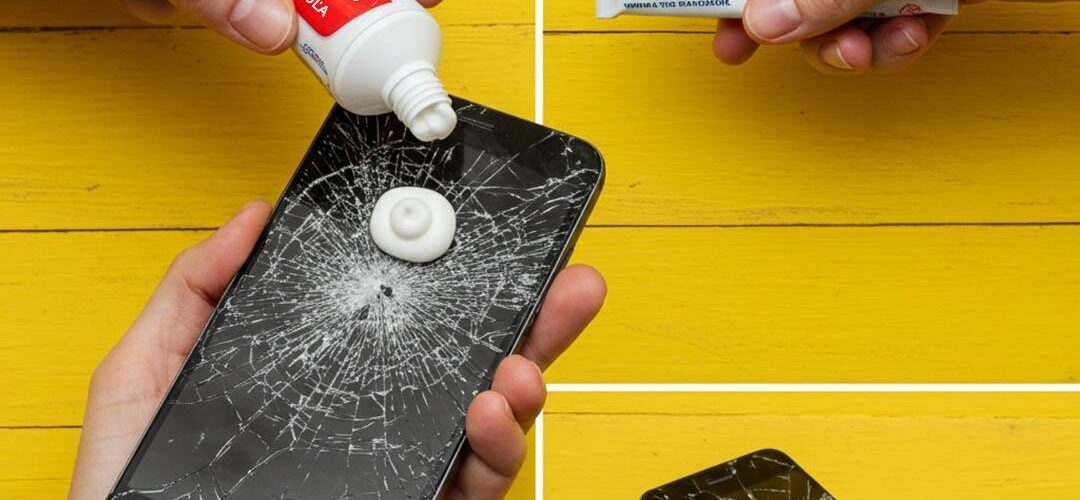
It’s tempting to use home remedies for scratches on your display, but here’s a dose of honest reality: Real scratches in the glass can’t be magically removed without damaging the screen’s protective layer.
However, there is a trick that works wonders visually without harming your phone.
The most effective tip: The “filling trick”
Instead of trying to sand down the glass (which usually makes things worse), you should conceal the scratch.
Cleaning: Thoroughly clean the screen with a microfiber cloth and some screen cleaner or isopropyl alcohol until it’s completely grease-free.
Screen protector or tempered glass: Buy a high-quality, self-adhesive screen protector (preferably made of tempered glass).
The effect: The silicone adhesive on the underside of the protector flows into the fine scratches. Since the adhesive has a similar refractive index to the glass, fine hairline scratches become practically invisible.
Why you should avoid “life hacks”
Many myths circulate online that do more harm than good to your phone:
Toothpaste: It contains abrasives. Using it will polish away the oleophobic (grease-repellent) coating of your display. The result: A dull spot on the screen that magically attracts fingerprints.
Baking soda paste: The moisture can seep into the edges, and the coarse grain often causes more micro-scratches than it removes.
Car polish: This is intended for paintwork, not for chemically tempered glass (like Gorilla Glass). It can permanently ruin your phone’s coating.
In summary:
If the scratch is deep enough that you can feel it with your fingernail, the only solution is to replace the display or accept it as a “characteristic.” For everything else, a high-quality tempered glass screen protector is the safest, most affordable, and most effective solution.
Do you have a deep “groove” in the glass, or more like those fine, spiderweb-like scratches that are only visible in sunlight?