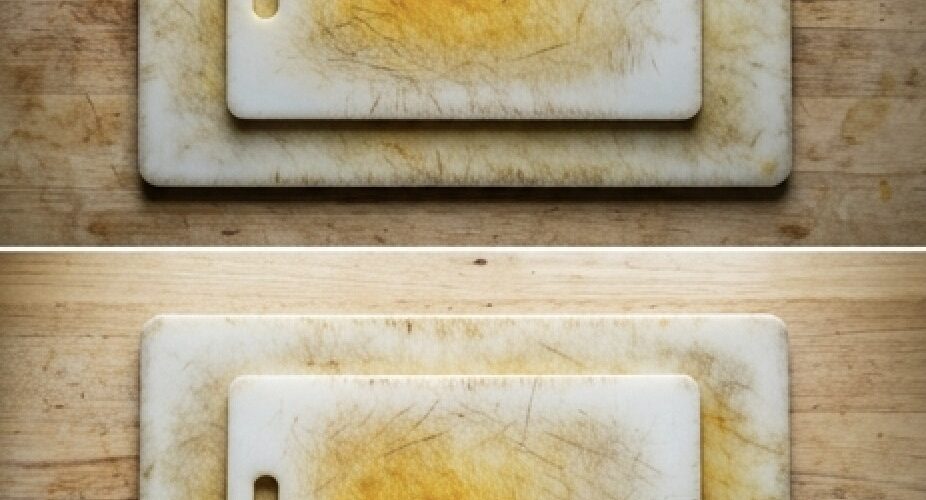
Restore a plastic cutting board to its original condition is often a bit of a challenge, as the material develops fine cracks over time, where pigments (such as from carrots or peppers) and bacteria can accumulate.
Here’s your battle plan for a board that looks like new:
Intensive cleaning (for stubborn stains)
If dishwashing detergent isn’t enough, a paste made from homemade ingredients can help. This method has a mild bleaching effect and loosens pigments from cut seams.
Ingredients: 1 tbsp baking powder (or baking soda), 1 tbsp salt, and 1 tbsp water.
Application:
Mix the ingredients into a thick paste.
Apply it generously to the stains.
Leave on for approximately 30 to 60 minutes.
Scrub the surface with a stiff brush or the rough side of a sponge.
Rinse thoroughly with hot water.
“Lemon cure” for stains
Citric acid is a natural bleach and also has a disinfectant effect.
Procedure: Rub half a lemon on the board and sprinkle generously with salt. Use the lemon as a scrubbing brush to work the salt into the grooves. Leave the board in the sun for about 20 minutes – UV light significantly increases the bleaching effect.
Deep cleaning and disinfection
For hygiene reasons (especially after processing meat), vinegar is ideal:
Vinegar bath: Spray white vinegar on the board and let it soak in. It neutralizes odors and kills many bacteria without damaging the plastic.
Tips for long-term care
Solving the problem
Deep grooves: If your countertop has too many deep grooves, bacteria can hide perfectly. The only solution is to smooth them out with a scraper or replace the countertop.
Dishwasher-safe plastic cutting boards should be washed regularly in a hot dishwasher cycle (above 60°C) to kill bacteria. Be careful, though: Thin boards can warp.
Immediate effect: Always rinse your countertop with cold water immediately after contact with food stains. Hot water often sets the dyes in the material even more.
Quick check from a professional: If your countertop has so many “craters” that it feels rough to the touch, it’s difficult to 100% disinfect it. In this case, replacing it is often the safer option for your kitchen’s hygiene.
Do you have any particular foods with particularly stubborn stains, or is it more of an odor issue?