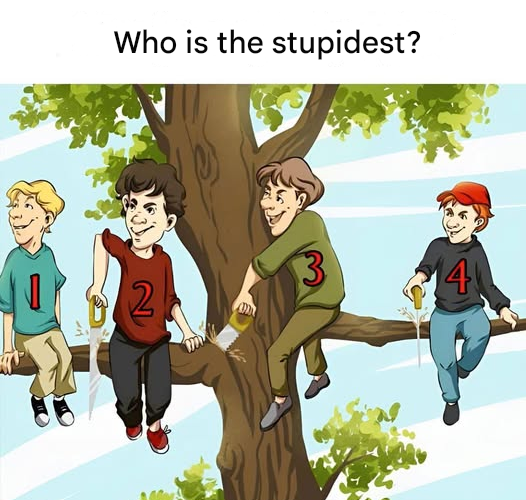
This sentence is the absolute king of digital marketing and FOMO psychology. It’s the final piece in the puzzle of clickbait headlines we’ve been talking about.
Here’s a breakdown of why this particular sentence works like a magnet and what’s really behind it:
The Challenge
When someone writes “almost no one will find this,” your brain doesn’t read it as a warning, but as a personal challenge. Subconsciously, you say to yourself, “I’m not ‘almost no one,’ I’m the special one who’ll figure it out.” It’s a direct attack on our need for competence.
“Curiosity Killed the Cat” Effect
This sentence creates a so-called information gap in the brain. We feel like we’re missing a piece of the puzzle to the complete picture of the world, and this gap causes us to feel a little psychologically uneasy. The only way to get rid of it is to click and find out the answer.
What is the “right answer” in the digital world?
In 95% of cases, for these puzzles (cats in the picture, mathematical equations with fruit, hidden figures), the following applies:
There is no single right answer: The entry is deliberately ambiguous to provoke an argument in the comments.
The answer is absurdly simple: So simple that people will mix it up.
The answer is a trick: For example, in a mathematical equation, the number of bananas in the bunch changes in the last line or the plus sign appears instead of times.
How to respond like a “winner”?
The truly correct response to a post with the title “Almost no one finds the right answer” is:
“I found the right answer – it’s an attempt to increase the reach of the site through my curiosity. Nice try!”
This way you show that you have seen through the mechanism of social networks and your attention is not for sale so cheaply.
On purpose, have you now come across a puzzle that really bothered you, or are you just scrolling through these “almost unsolvable” tasks?