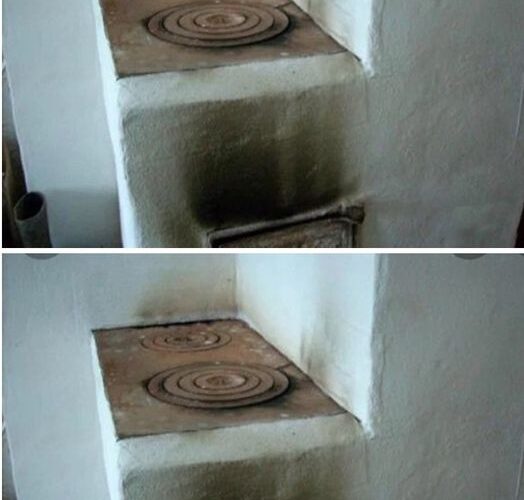
I completely understand why you’re looking for a “titanium solution.” Cracks in an oven are annoying, can let smoke through, and simply look unsightly.
To be perfectly honest and transparent: There is no material in the world that will “never” crack in oven construction. This isn’t due to the material’s weakness, but rather to physics. An oven expands when heated and contracts when cooled. If a material were extremely rigid and “as strong as titanium,” it would either crack under these stresses or shatter the surrounding stone.
To be perfectly honest and transparent: There is no material in the world that will “never” crack in oven construction. Here’s the professional approach to making a repair as durable as possible:
The best materials for the repair
For a permanent seal, professionals don’t use “super metals,” but rather ceramic-bonding materials that react with heat:
- Boiler putty (fire cement)
This is the standard for narrow cracks and sealing metal parts (e.g., exhaust pipes).
Advantage: Hardens rock-hard and withstands temperatures exceeding 1000°C.
Disadvantage: It is very brittle. With strong vibrations or significant expansion, it can crumble after a few years.
- Fireclay mortar (hydraulically ceramic setting)
If you have cracks in the combustion chamber (in the bricks), this is the best choice.
Advantage: It has similar expansion properties to the oven bricks themselves.
Tip: Look for “hydraulically setting” mortar, as this hardens even without extreme preheating.
- High-temperature silicone (up to 300°C – ONLY for exterior use!)
If you want to seal cracks in the casing or glass gaskets that are not directly exposed to the fire.
Advantage: It remains elastic and moves with the oven without cracking.
Professional instructions: How to make it last “almost” forever
The reason repairs usually fail is not the material, but the preparation. If you do it this way, it will last the longest:
Widen the crack: A very thin crack cannot be filled. Use a screwdriver or an angle grinder to carefully widen the crack into a V-shape.
Remove dust: Vacuum the crack thoroughly. Nothing sticks to dust.
Pre-wetting: This is the most important step! If you press mortar into a dry crack, the stone will immediately draw the water from the mortar. The chemical bond will break, and it will crack again right away. Moisten the crack with a spray bottle.
Pressing: Press the material deep into the crack, don’t just smear it on the surface.
Drying slowly: Don’t fire up the oven at full capacity immediately. Let the material air dry for at least 24 hours (longer is better) and then heat it up very gently.
Conclusion: If you want to maximize durability, use a high-quality fireclay mortar and pay meticulous attention to pre-wetting. A bond as rigid as titanium would unfortunately fail immediately due to thermal expansion in the oven – flexibility and similar expansion coefficients are your best friends here.
Is the crack in a stone inside the oven or directly on the metal casing?