It almost sounds like a secret passed down from grandmothers, but there’s actually a lot of science behind this “golden trick.” Adding vinegar to potatoes not only improves the taste but also fundamentally changes the texture.
Here’s why you’ll never want to be without it after the first time:
Boiled potatoes that don’t fall apart
When you boil potatoes for salad or for frying, there’s a risk that the outside will become mealy and the potatoes will fall apart before they’re cooked through.
The trick: After the first 10 minutes of cooking, add a tablespoon of vinegar to the boiling water.
Why it works: Vinegar forms a thin protective film on the outside of the potato, so it stays firm even after cooking.
Super crispy baked potatoes
Do you dream of roast potatoes with a restaurant-quality crust? Then vinegar is your best ally.
The trick: Blanch the potatoes in water with vinegar before baking.
Why it works: The acid prevents the potatoes’ pectin from breaking down too quickly. After baking, the surface dries better, allowing the Maillard reaction to produce incredible crispiness without burning the starch.
Balanced flavor: Potato starch can feel a bit heavy in the mouth.
The gourmet tip: A splash of vinegar (perhaps apple cider vinegar or white wine) at the end of the cooking time balances the richness of oil or butter, making the dish fresher and lighter.
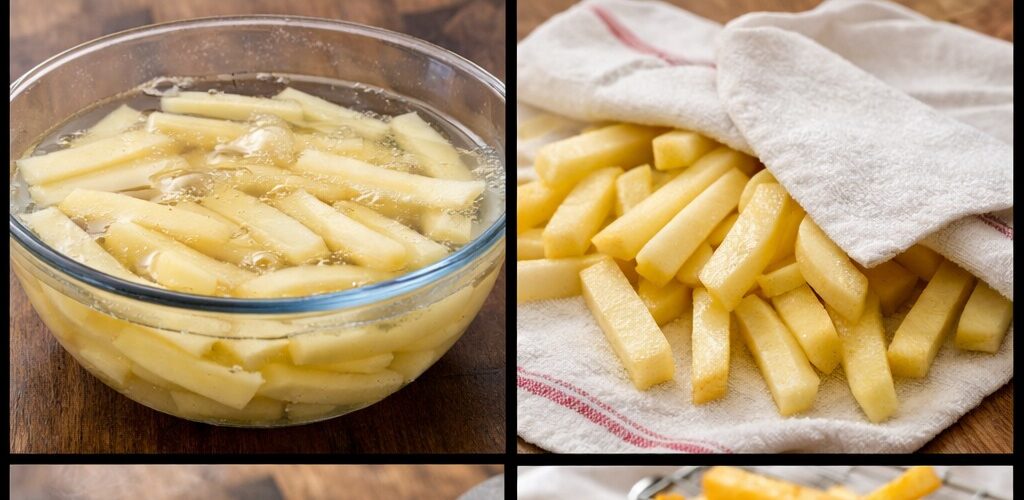
A little extra tip: When making homemade French fries, soak them in cold water with vinegar for about 30 minutes before frying. This releases excess starch, resulting in a much more golden brown and crispy texture!
Style tip: Don’t overdo it! The goal is to utilize the acid’s chemical reaction, not to turn your side dish into pickles.
How do you like to prepare potatoes? Perhaps I have a tip specifically for this recipe!