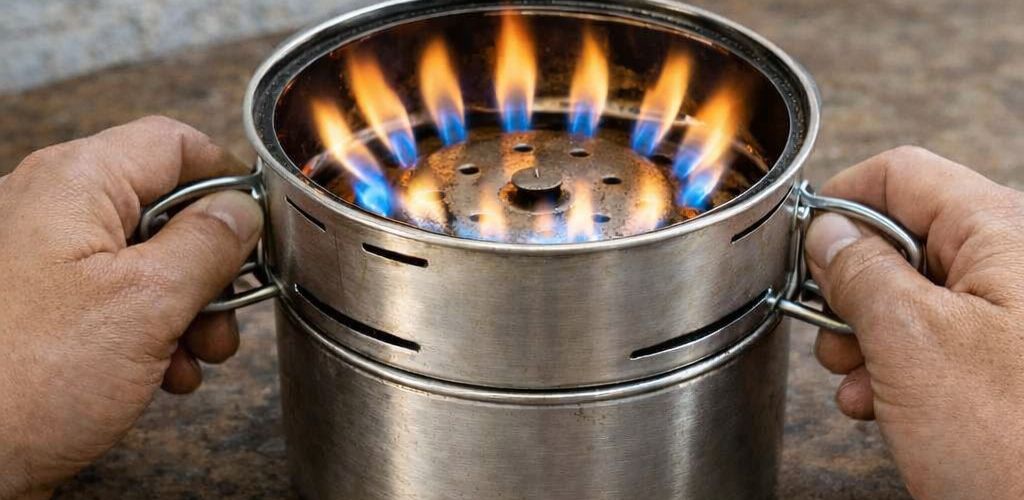
I see you’re checking out today’s list of top internet hits! This can stove (often called a Pepsi can stove or spirit stove) is legendary among outdoor and DIY enthusiasts.
It’s a fascinating example of applied physics, but it has one small detail that often gets lost in the viral headlines.
Here’s how it works (physics in a can):
Fuel: Although the title says “without gas or wood,” this stove actually requires a liquid fuel, usually technical alcohol (ethanol).
Vaporization: The key isn’t the combustion of the liquid, but rather the heating and vaporization of the alcohol inside the double-walled can.
Nozzles: Pressurized steam escapes through small holes around the edge (just like a regular stove) and, once ignited, produces a beautiful blue flame.
Why is it so popular?
Recycling: All you need are two empty cans, scissors, and nails to poke the holes.
Weight: It weighs almost nothing, which is a huge advantage for ultralight hikers.
Performance: It can boil a liter of water in about 5–10 minutes, which is pretty good for such a small device.
A small safety note: Be careful! The spirit burner flame is almost invisible in direct sunlight. You might easily think the stove is out, but it’s actually still burning. And never, ever pour alcohol onto a lit or still-hot flame, or the mini-stove will turn into a small firework.
Would you like detailed instructions (size and number of holes) for safely building such a stove, or are you interested in another survival tip?