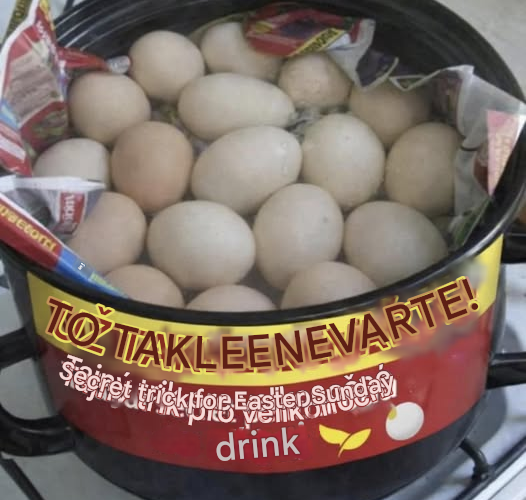
Boiling perfect, crack-free Easter eggs sometimes sounds like magic, but it’s actually a matter of physics and a few tricks our grandmothers already knew. No more frantic stirring and haphazardly throwing eggs into the pot!
Here’s the “secret recipe” for perfectly smooth Easter eggs:
Acclimatization (important step): Never put eggs directly from the refrigerator into hot water. The temperature shock is the most common cause of cracked shells.
Tip: Take the eggs out of the refrigerator at least 30–60 minutes before boiling so they can reach room temperature.
The Needle Trick: There’s an air bubble at the blunt end of the egg. When the water heats up, the air expands and presses against the shell until it cracks.
The secret: Carefully pierce a small hole in the blunt end of the egg with a thin needle. This allows the air to escape and equalizes the pressure.
The right water bath: Place the eggs in lukewarm, not boiling, water. The water should cover the eggs so they are at least 2 cm below the surface.
The trick: Add a tablespoon of vinegar and a generous handful of salt to the water. The salt increases the density of the water (the eggs won’t sink as easily), and the vinegar ensures that the egg white coagulates immediately and doesn’t leak, even if the shell cracks.
Don’t let the water boil too quickly: The water should only simmer gently. If the eggs bounce around in the pot like on a trampoline, they will bump into each other and crack.
The right preparation: Once the water boils, reduce the heat.
Cooking Times for Perfect Results
For hard-boiled Easter eggs, please observe the following times from the moment the water boils:
Egg Type Cooking Time Result
Soft-boiled 4–5 minutes Runny yolk and partially runny white
Radish 6–7 minutes Firm white, creamy yolk
Hard-boiled 9–10 minutes Ideal for dyeing and Easter carols
Caution: Do not cook the eggs for longer than 12 minutes. Otherwise, an unsightly greenish ring will form around the yolk (a reaction of iron and sulfur), and the yolk will become runny and dry.
Tip: Let the eggs cool. After the cooking time is up, immediately drain the hot water and pour ice water over the eggs. This stops the cooking process and makes the eggs easier to peel.
Will you be dyeing your eggs naturally this year (e.g., in onion skins) or using classic commercial egg dyes?