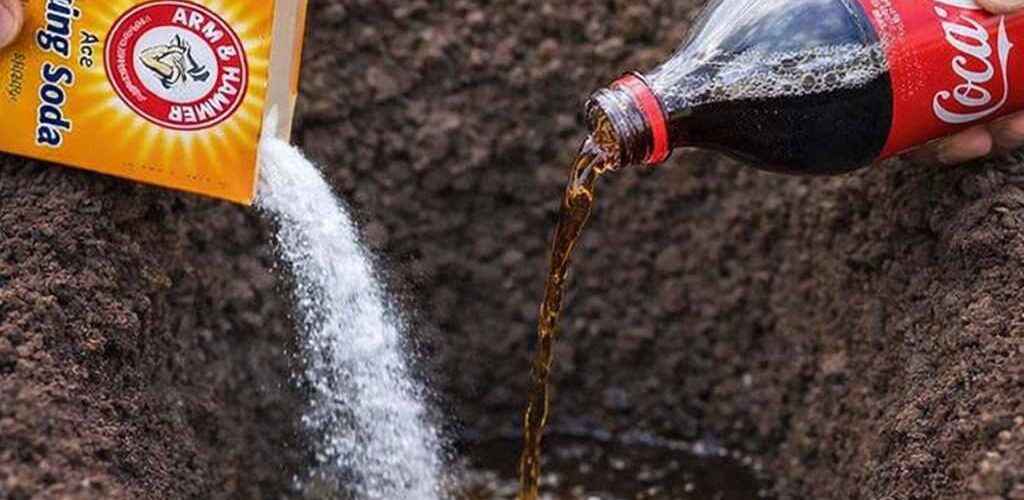
This combination might sound like a crazy school experiment, but it has a very specific (and sometimes surprising) application in gardening. Mixing baking soda and cola triggers a chemical reaction that experts use for various purposes. Here’s an explanation of what happens in the soil and on the leaves: 1. The Reaction: Cola is an effervescent cleaner. It contains phosphoric acid (H₃PO₄), and baking soda is alkaline
(sodium bicarbonate). When mixed, a vigorous reaction occurs, releasing carbon dioxide (CO₂). Application: This mixture is excellent for cleaning garden tools. Rusty shears or spades can simply be dipped into the foaming mixture. The acid in the cola dissolves the rust, and the abrasive action of the powder helps to remove it. 2. Slug and Ant Trap: Gardeners often use this combination as a “biocide”: Slugs:
The sugar in cola attracts them, and the combination of acid and baking soda is lethal to their mucous membranes. Ants: Pouring this mixture directly into an anthill allows the released CO₂ and the sticky sugar to effectively eliminate the ants without harsh chemicals. 3. Moss and Mold Control: For moss on garden paths or powdery mildew (white coating) on plant leaves: Baking soda alters the pH of the leaf surface, thus preventing the spread of mold.
Thanks to the acid and sugar, the cola mixture adheres to the moss and gradually dries it out. ⚠️ Things to consider (expert advice): Although effective, use sparingly: Sugar attracts wasps: Too much cola in the garden can cause wasp and fly infestations. Be careful around roots: Baking soda contains sodium. Adding too much of this mixture to the soil can impair water absorption by plants (soil salinization).
Tip: If you intend to use this mixture as a pesticide, always dilute it 1:5 with water to avoid burning the delicate leaves of your plants. Are you interested in how to clean old garden furniture with this mixture, or are you looking for a way to treat a specific pest?