Vegetable Oils in Focus: Types, Uses in the Kitchen, and Helpful Tips
The world of vegetable oils is much more diverse than you might initially think. While olive oil plays an important role in Mediterranean cuisine, various seed oils offer specific advantages for different cooking techniques. Vegetable oil is a plant-based fat obtained by pressing oilseeds. Whether for crispy frying, as a source of omega-3 fatty acids, or as a base for dressings – choosing the right oil determines the taste and nutritional value of your dishes.
Production of Vegetable Oils: Mechanical vs. Chemical
How are vegetable oils actually produced? Unlike extra virgin olive oil, which by law must be cold-pressed, there are two main methods for extracting oil from seeds: mechanical pressing and chemical extraction with solvents. Mechanical cold pressing is the best method, as it preserves the natural nutrients and pure flavor of the seeds. While chemical extraction is faster and cheaper, it results in a less flavorful and lower-quality product. When buying oils, look for labels such as “cold-pressed” or “first pressing.”
The Most Common Oils and Their Ideal Uses
There isn’t just one type of vegetable oil, but a whole range of different varieties. Each type has its own heat resistance (smoke point) and specific nutritional values. While some oils are ideal for deep-frying at high temperatures, others should only be used for cold dishes to preserve their valuable nutrients.
Overview of the most common vegetable oils:
Oil type Properties Use
Sunflower oil Rich in oleic acid, light yellow For frying and baking at medium heat
Peanut oil Very heat-resistant, pleasant flavor Ideal for frying
Flaxseed oil Rich in omega-3 fatty acids Only for cold dishes (salads, ricotta)
Corn oil Rich in vitamins and beta-carotene Cold dishes and light stews
Pumpkin oil Intense, nutty flavor, dark green Raw as a dressing or garnish
Soybean oil Mild, rich in omega-3 fatty acids Versatile for cold dishes
What you should consider when buying and choosing
A good vegetable oil is an important ally for your health. Peanut oil, for example, protects the cardiovascular system thanks to its high vitamin E content, while corn oil can help lower bad cholesterol. Sunflower oil, on the other hand, is known for its positive effect on triglyceride levels. Beware of labels that state “vegetable oil from various seeds”. It is usually a mixture of various residues, the exact composition of which is often unclear. For a conscious diet, it is recommended to choose single-variety oils.
Storage and Shelf Life: Does Oil Spoil?
Vegetable oils are sensitive to light and heat and can therefore turn yellow. Linseed oil, in particular, is very sensitive and should always be refrigerated after opening. Oils generally have a shelf life of about 12–18 months. To extend their shelf life, it is recommended to transfer the oil from clear plastic bottles to dark glass bottles and store them in a cool, dark place. While yellowed oil is usually not immediately harmful to health, it can cause digestive problems and taste bitter. A little tip: Old, yellowed oil is excellent for nail and hair care!
A Clever Trick with the Tab on the Lid
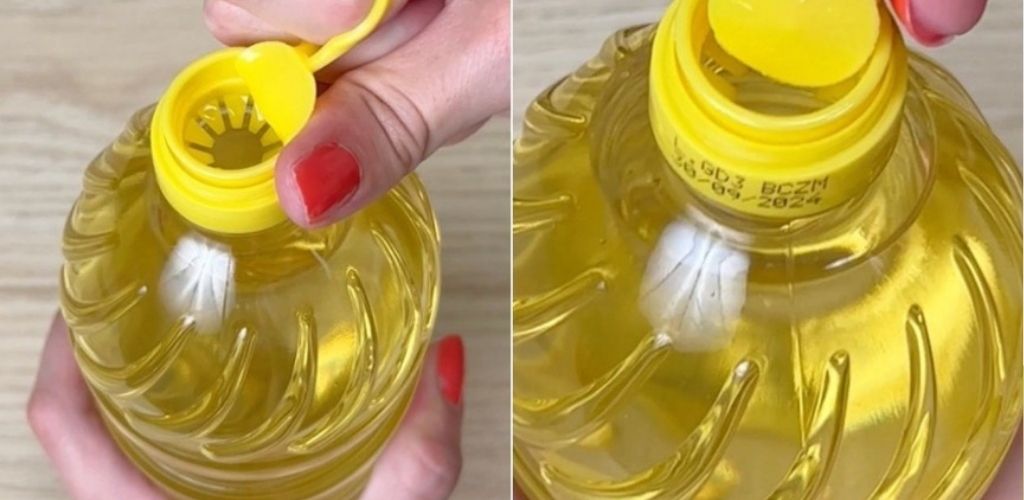
Have you ever wondered what the small plastic ring with the tab under the lid is for? Most people throw the lid away immediately, but it has a secret function! Remove the tab, turn the lid upside down, and reinsert it into the opening with the ring facing down. With a little pressure, it will click into place. This creates a small slot that acts as an integrated dispenser. The oil now flows out evenly, so you waste less and can season your dishes more precisely.
Was this guide to vegetable oils helpful? We want to help you make the best choices in the kitchen for your health and enjoyment. To learn more about products, professional tips, and healthy eating, subscribe to our page, like, and share this post with your friends! Your support motivates us to create new and helpful content for you every day.
Which oil do you prefer for frying and which for salads? Have you tried the lid trick yet? Share your experiences and questions in the comments – we look forward to hearing from you!