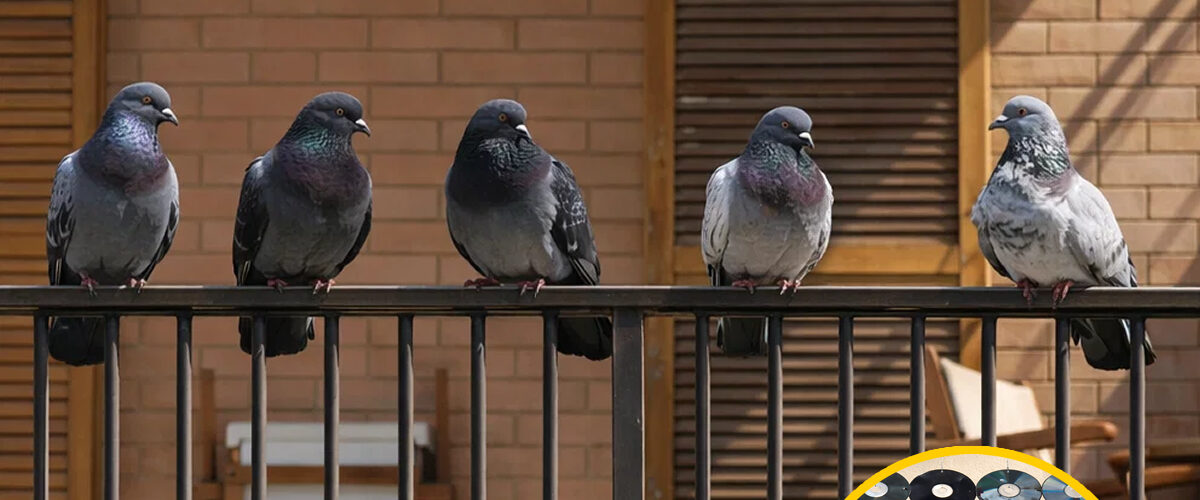
This is a topic that requires nerves of steel, or the right trick. Pigeons are extremely tenacious because they consider their nest to be their “property.”
If you’re looking for the perfect way to permanently get rid of them, a single wind turbine usually won’t do the trick. Here’s the “strategic plan” to get your balcony back:
Visual trick: “Scare them off.”
Pigeons are afraid of birds of prey, but they’re not stupid. After two days, they’ll be able to see through a hard plastic owl.
Trick: Use movable reflectors. Old CDs hung on a string or special reflective spirals move in the wind and create unpredictable flashes of light. This greatly irritates pigeons’ eyesight.
Important: Change the location of the decoys regularly to prevent pigeons from getting used to them.
Tactile trick: No landing
Pigeons only land where they feel comfortable.
Post: It’s not elegant, but it’s effective on railings or windowsills.
Tight wires: A more discreet method. Thin wires are stretched along the railing, making it impossible for pigeons to land safely.
Watch out for nets: They must be taut so that pigeons don’t get caught in them (for animal protection!).
The most important step: “Don’t invite them in.”
Pigeons come looking for food or nesting opportunities.
Eliminate food sources: Breakfast crumbs or cat food left out on the balcony are like a sign saying “eat as much as you want.”
Seal corners and cracks: Do you have shelves or dark corners on the balcony? Pigeons love sheltered nooks and crannies. Block access or fill the holes.
💡 Tip: Cleaning
If a pigeon has already been there, it will leave behind droppings. These contain pheromones that signal to other pigeons: “This is safe!”
Thoroughly clean the affected areas with detergent and vinegar. This will remove not only dirt, but also the odor. But be careful: don’t forget to wear a mask, as the dust from dried droppings can contain pathogens.
Why are they here?
Sometimes it’s helpful to know if they’re just passing through or if they’re already building a nest. Can you explain how to recognize a developing nest and intervene promptly without violating animal welfare regulations?