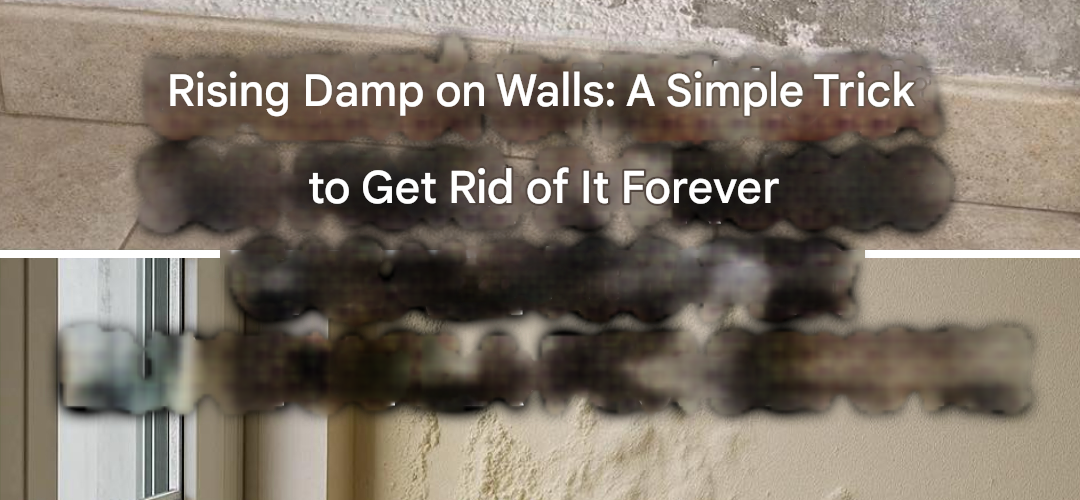
Sounds too good to be true, right? When it comes to “simple tricks” against rising damp, we have to be honest: there’s no magic bullet.
Rising damp is caused by capillary action in the masonry when the horizontal damp-proof course is missing or damaged. The water is absorbed like water by blotting paper.
However, there are methods you can use to solve the problem yourself without hiring a construction company. Here’s the most effective “trick” for DIYers:
DIY Trick: The Injection Method
Instead of sawing open the entire wall, special injection creams based on silane/siloxane are used today.
Here’s how it works:
Drill holes: Drill holes at regular intervals (approx. 10–12 cm) into the lowest mortar joint.
Cleaning: Vacuum the dust out of the holes (important so the cream can penetrate).
Filling: The cream is injected into the holes using a caulking gun.
Effect: The cream spreads across the damp stone, liquefies, and forms a chemical barrier that prevents water from penetrating.
Why it’s better than “home remedies”: Many swear by salt or special paints, but these only treat the symptoms. The injection method addresses the root cause.
Important immediate measures (checklist):
Before drilling, check these three points, which are often mistaken for moisture:
Defective gutter: Is water running onto the foundation from the outside?
Condensation: Is there sufficient ventilation? (Cross ventilation instead of opening windows).
Salt-damaged plaster: The wall is often dry, but the old plaster attracts moisture due to the accumulated salts. The only solution is to remove the old plaster and apply a renovation plaster.
What you should avoid:
Simply painting over it: “Anti-mold paint” traps moisture. The wall suffocates, and the damage beneath the paint only worsens.
Electronic dehumidifiers (miracle devices): There are devices that supposedly work with radio waves. The scientific evidence for this is often very weak—save your money and invest in a mechanical or chemical barrier instead.
Would you like detailed instructions for the injection method, including a materials list?