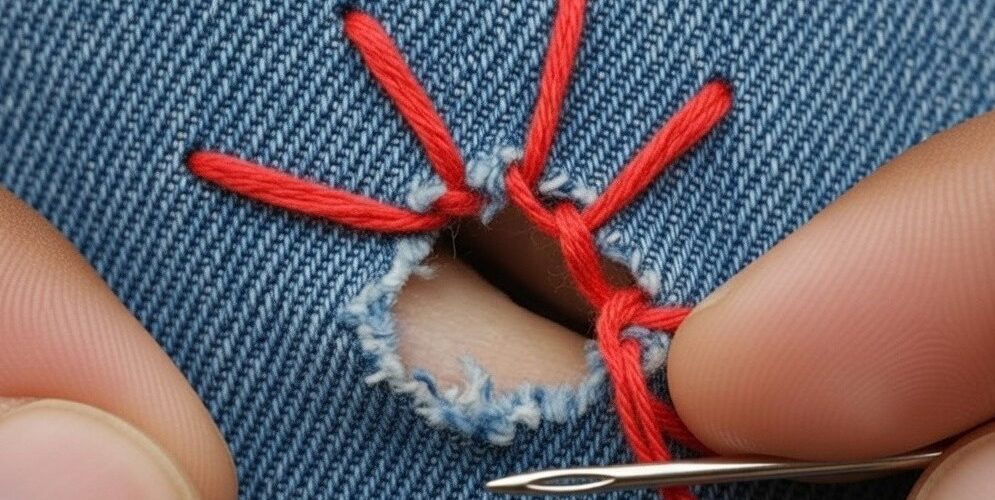
A rip in the crotch or a hole at the knee doesn’t mean the end for your jeans. An experienced tailor knows a trick that’s much more aesthetically pleasing than a classic patch. It’s the darning technique, which modern sewing machines and skilled hands have transformed into an almost invisible art form.
Here’s the trick that will save your favorite jeans in minutes:
The secret of the invisible seam: The machine darning technique
Forget sewing on another piece of fabric. The tailor’s trick is to mimic the structure of the original fabric with thread.
What you need: Thread in the exact right color: This is the key to success. When mending jeans, look for a thread that matches the color of the raised areas in the denim fabric.
Thin, fusible interfacing: Available at any haberdashery for just a few cents.
Sewing machine (or a little patience and a needle).
Step-by-step instructions:
Reinforcing from the inside: Turn the jeans inside out. Iron a piece of interfacing over the hole. This will hold the edges of the hole together and create a stable base so the fabric doesn’t stretch while sewing.
Weave direction: Look closely at the jeans. You’ll see diagonal lines (twill weave). It’s important to sew exactly in the direction of these lines.
Dense zigzag stitch: Sew the hole closed with a zigzag stitch from the right side (use the reverse stitch function on your sewing machine). Don’t just sew horizontally; follow the grain of the fabric.
Layering: Sew close together until the hole is completely covered by the threads. Thanks to the interfacing on the bottom and the threads on top, a new, stable fabric is created.
Why is this better than a patch?
Flexibility: The repaired area remains relatively soft and doesn’t pinch (ideal for the crotch).
Invisibility: If you match the color of the sewing thread, no one will be able to tell from 20 cm away that there was ever a hole there.
Durability: The repaired area is often even more durable than the surrounding fabric.
Tip for “hopeless” knee repairs: If the hole is too big for an invisible repair, tailors advise: Embrace it! Place a piece of patterned fabric (e.g., plaid or lace) inside the hole and sew it closed with thick, contrasting thread. This turns the flaw into a deliberate design element.
Tailor’s tip: Always wash your jeans before sewing. Denim shrinks when washed, and you need to know the actual size of the hole to prevent the fabric from shrinking after the repair.
Need tips on choosing the right needle for thick denim, or wondering how to fix a zipper that keeps breaking?