Exactly! Before you toss those cardboard boxes in the trash, take a closer look. They’re little treasures in the garden, especially if they’re made of paper (cardboard). Plastic cartons are rather impractical in the garden, but biodegradable ones are a great help.
Here are the best ways to use them “honestly” and without unnecessary hype:
Eco-friendly plant pots for seedlings
This is the most classic use. An egg carton is essentially a ready-made set of small flowers.
Here’s how: Fill the holes with soil and sow seeds (tomatoes, peppers, herbs).
The biggest advantage: When the seedlings are big enough, you don’t have to dig them up. Simply cut out the carton and place the entire hole, with the plant inside, directly into the soil. The cardboard decomposes in the soil, and the roots grow through it without experiencing the shock of transplanting.
A “template” for perfect rows
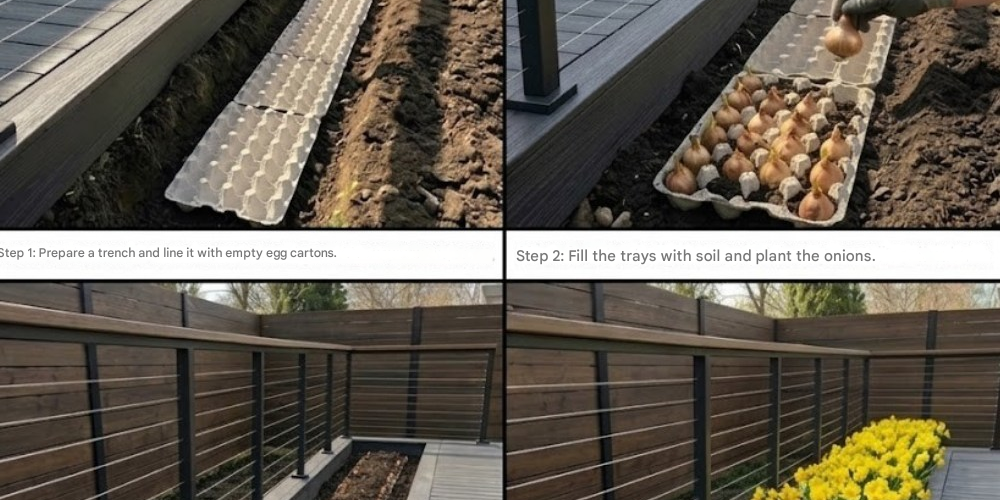
When planting radishes, carrots, or lettuce, an egg carton is an ingenious tool for marking the planting rows.
The trick: Press the empty carton into the loosened soil. The holes in the carton create evenly spaced holes at the ideal interval. Then simply place a seed in each hole and cover it. No more measuring with a ruler!
A lifesaver for the compost
Cardboard is an excellent source of carbon (the brown component of compost).
Why it works: Compost needs a balance between green (nitrogen-rich) components (grass, vegetable scraps) and brown (carbon-rich) components (paper, leaves).
Tip: Tear cardboard into smaller pieces and add them to the compost. They help aerate the compost heap and absorb excess moisture.
Protecting fruit from rotting
Do you have strawberries or small pumpkins in your garden and don’t want them lying directly on the damp soil?
Place pieces of cardboard underneath. The cardboard forms a barrier that insulates the fruit from the damp soil and reduces the risk of mold and rot before ripening.
Comparison: Paper vs. Plastic in the Garden
Type of Cardboard
Use in the Garden
Environmental Impact
Paper: Additives, compost, mulch. Excellent. Decomposes and improves the soil.
Plastic: At most, use it as a tray for small garden tools. Poor. Does not decompose in the soil, contains microplastics.
What to Look Out For? (Note)
Adhesive and Paint: Most modern cardboard boxes use safe, soy-based paints. However, if there are large, glossy stickers on the box, it’s best to remove them—they contain plastic film that does not decompose.
Salmonella: Although the risk is low, you should not use boxes containing a broken egg for seedlings that you intend to eat immediately. However, the bacteria are naturally killed in compost due to the high temperatures during the decomposition process.
My tip: If you want to overwinter flower bulbs (e.g., gladiolas), egg cartons are ideal for storing them separately in the cellar. They are well-ventilated, and the bulbs don’t touch each other, preventing rot.
Would you like to know how to use other kitchen waste, such as coffee grounds or eggshells, in the garden?