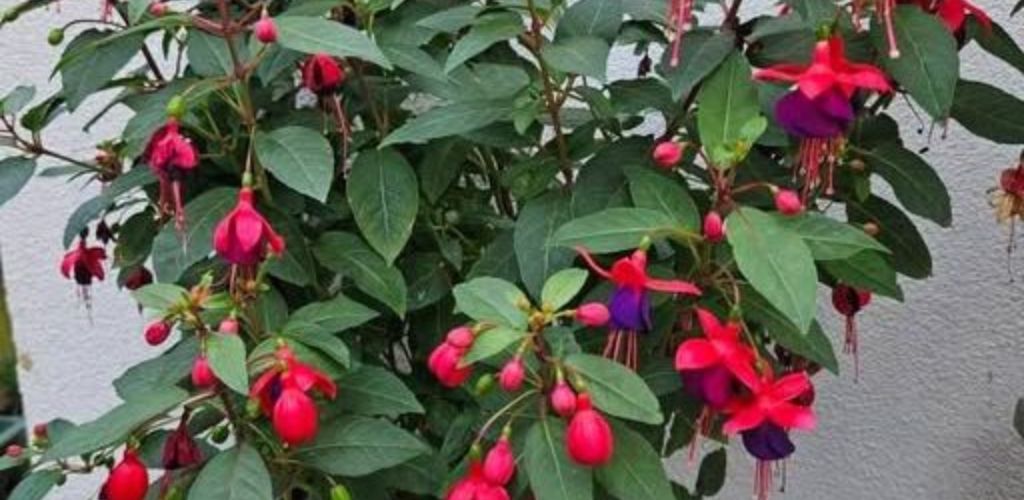
A fuchsia that blooms continuously is the holy grail for many gardeners. Although these plants are naturally seasonal, hybrid varieties have the potential to bloom almost non-stop—provided you know how to trick their internal clock and provide them with optimal conditions.
Here are the secrets that are often left unmentioned in standard gardening literature:
The “Two-Second Rule” for Pruning
Fuchsias bloom on new shoots. If left to grow unchecked, they stretch and stop blooming.
The secret: Pinch off the tip of each shoot as soon as it has developed two pairs of leaves. This encourages the plant to branch out. The more branches, the more flower buds. Important: If you want year-round blooms, you must continue pruning even in winter (if the plant is kept indoors).
Optimal Temperature
Fuchsias are not tropical plants; they prefer a cooler, more humid, woodland climate.
Important for success: If the temperature rises above 25°C (77°F), the fuchsia switches to survival mode and stops forming buds. A year-round tip: To bloom even in winter, it needs a temperature of around 15–18°C (59–64°F) and plenty of indirect light. It should not be placed above a radiator! Dry air causes the buds to drop.
Uncontrolled Fertilizing
Most people fertilize every two weeks with a high dose. This is a shock to the fuchsia.
Pro tip: Use a potassium-rich bloom fertilizer every other watering, but only a quarter of the recommended dose. This continuous supply of nutrients keeps the plant in growth mode.
Year-Round Care Instructions
Factors: Summer Location, Winter Location (for flowering)
Light: Partial shade (east-facing), Full light (south-facing window/grow light)
Watering: Daily (soil must always be moist), Careful (avoid waterlogging in the saucer)
Humidity: Mist leaves in the evening, use a humidifier in the room
Fertilizing: Potassium + Phosphorus, Balanced liquid fertilizer
The Secret to Removing the “Berries”
Few people know that fuchsias develop small, dark fruits (testes) after flowering.
Why this is important: As soon as the plant develops a fruit, its system signals: “Done, mission accomplished, the seeds are in.” From this point on, it stops forming new buds.
Action: Cut off each withered flower, including the stem. The plant responds by producing new flowers to reproduce again.
Strengthening Roots in Winter
For the hybrid to bloom in December, its root system must not be dormant.
Tip: Add a few drops of rooting stimulant or a weak willow twig solution to your watering can once a month. Strong roots ensure abundant blooms, even during short days.
Caution: Year-round flowering is extremely taxing on the plant. If you notice yellowing leaves or weak stems, give it at least a month of rest in a cool, dark place without fertilizing.
Would you like to know how to make your own spray against whiteflies, which pose the biggest threat to indoor fuchsias?