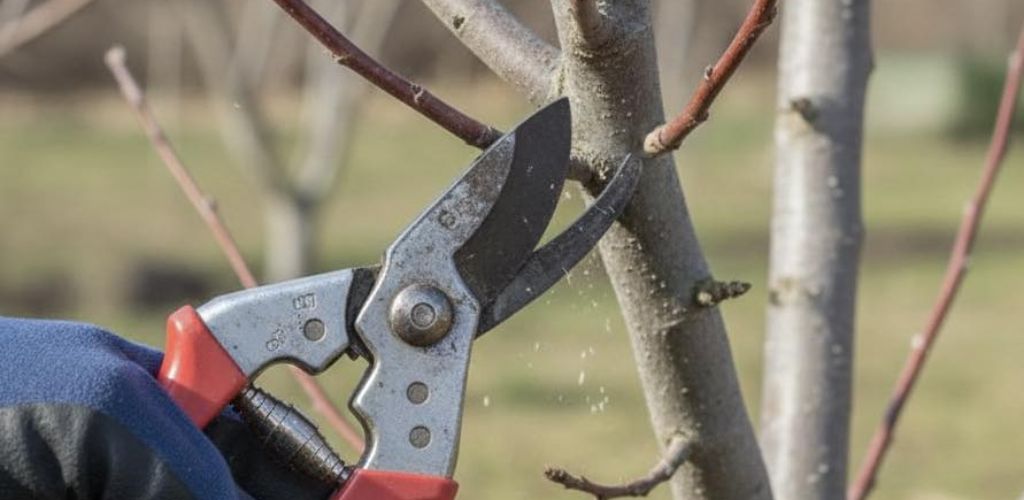
Pruning fruit trees is one of the most important jobs in the garden. A properly performed cut can significantly affect the health of the tree, the amount of fruit and their quality. Nevertheless, many gardeners neglect this step or do it incorrectly, which can lead to a smaller harvest, weaker trees or a higher risk of disease.
If you learn the basic rules, pruning can be very easy and bring long-term results – healthier trees, better growth and a richer harvest.
🌱 Why is pruning fruit trees important
1️⃣ Promotes fruit formation
When you remove excess or weak branches, the tree can focus more energy on strong and fruitful branches. The result is larger and better quality fruit.
The cut also helps prevent an excessive amount of fruit, which could weaken the tree.
2️⃣ Improves access to light and air
A well-lit crown allows sunlight to penetrate deep between the branches. This is important for even fruit ripening.
Good air circulation also helps reduce humidity, which often promotes the development of mold and other diseases.
3️⃣ Extends the life of the tree
Removing old, dry or diseased branches allows the tree to form new and strong shoots.
Trees without regular care age faster and are more susceptible to diseases and pests.
4️⃣ Helps control the size of the tree
Regular pruning allows you to keep the tree at a reasonable height, which makes it easier to:
harvest
tree care
protection against branches breaking under the weight of the crop
✂️ Basic types of fruit tree pruning
🌿 Shaping cut – crown shaping
It is mainly performed on young trees during the first 3 to 5 years of growth.
How to proceed:
select 3–5 main branches that will form the base of the crown
remove branches growing vertically upwards
remove shoots growing inside the crown
This cut is important for apple, pear, cherry or plum trees, for example.
🍎 Fruit-promoting cut
Performed on adult trees to promote fruit formation.
Procedure:
remove dry, weak or diseased branches
thin out shoots that are too dense
shorten branches that are too long
Used for apple, peach, apricot, plum or cherry trees, for example.
🌳 Rejuvenating cut
Used on older trees, usually older than 10–15 years.
How to do it:
remove old branches that are no longer bearing
shorten main branches to encourage new shoots
remove broken or diseased branches
This procedure can rejuvenate the tree and extend its lifespan.
📅 When is the best time to prune
❄️ Winter pruning (recommended)
It is carried out during the dormant period, usually in February-March, before growth begins.
Suitable for:
apple trees
pears
plums
peaches
apricots
It is important to avoid days with severe frosts.
🌿 Spring pruning
It is carried out in March or April, as soon as the risk of severe frosts has passed. Often used on young trees.
☀️ Summer pruning
It is usually carried out in July or August and is mainly used to remove excess shoots.
It also helps maintain the size of the crown.
🧰 How to prune correctly
use sharp and clean pruning shears or a saw
cut at an angle of approximately 45° so that water does not flow into the wound
remove diseased branches as close to where they grow as possible
never remove too many branches at once
⚠️ Most common pruning mistakes
❌ cutting too hard – the tree can be weakened
❌ cutting during severe frosts or extreme heat
❌ completely omitting regular care
❌ using blunt tools that damage the branches
🌳 Regular and correct pruning is one of the best ways to keep fruit trees healthy and productive. With a few basic rules, you can ensure that your trees grow strong, well-lit and produce a rich harvest every year.
👉 Follow our page, like 👍, share this article and help spread awareness – it could save your life and the lives of your loved ones