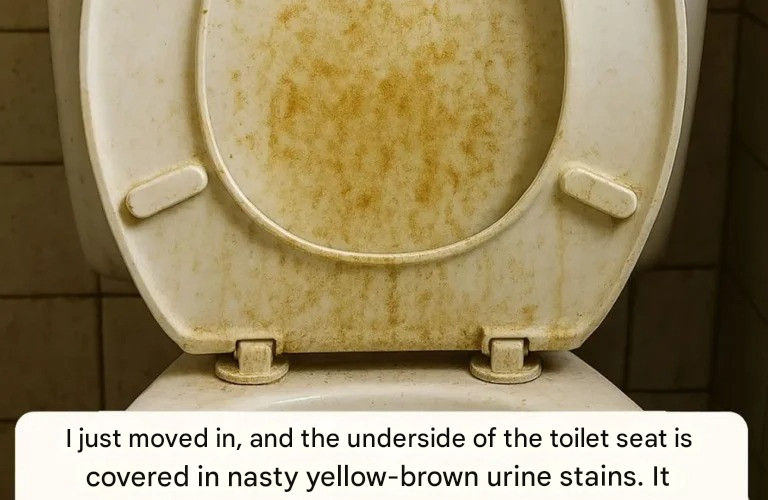
Cleaning a toilet seat may seem like a simple task until you encounter those stubborn yellow stains around the hinges or on the underside. Harsh chemicals can irreparably damage the surface (causing dull streaks), so it’s best to proceed with caution.
Here’s how to achieve a hygienic clean without damaging the material:
“Baking Soda Paste” Method (for Yellow Stains)
Yellow stains are often caused by urine reacting with plastic or limescale. A simple wipe with a cloth isn’t enough.
Ingredients: Baking soda and a little warm water.
Method: Prepare a thick paste and apply it to the affected areas (especially around the hinges and rubber feet).
Drying Time: Leave for 15-20 minutes.
Rinse: Gently scrub the area with an old toothbrush and then rinse with clean water.
Disinfect and polish with vinegar
Vinegar is a natural antibacterial and is also excellent for removing limescale, which roughens the seat surface (where dirt accumulates).
Mix white vinegar and water in a spray bottle in a 1:1 ratio.
Spray over the entire seat, let it sit for a minute, and dry with a microfiber cloth.
Caution: If the seat is made of wood (painted), use vinegar sparingly and dry it immediately to prevent swelling.
What NOT to do (Common Mistakes)
What to avoid Why?
Rough steel wool Creates micro-scratches where bacteria can nest even more quickly.
Pure chlorine (Savo) Prolonged exposure to chlorine on white plastic causes it to yellow.
Hot Water: Water that’s too hot can warp cheaper plastic seats.
Export to table
Tip: Disassembly is essential
Most modern toilets have an EasyTake quick-release system. These are the two buttons on the hinges.
Press the buttons and simply pull the entire seat up.
Rinse it in the bathtub or shower.
Clean the ceramic hinges, even in hard-to-reach places, with a rag. This is the fastest way to eliminate unpleasant odors.
A word of caution: if you clean your toilet with a strong acid gel (for the inside of the bowl), leave the lid and seat open until the gel has taken effect. The fumes from these cleaners can damage the surface of the bowl if the lid is closed.
Would you also like tips on how to remove stubborn limescale directly from the inside of the toilet?