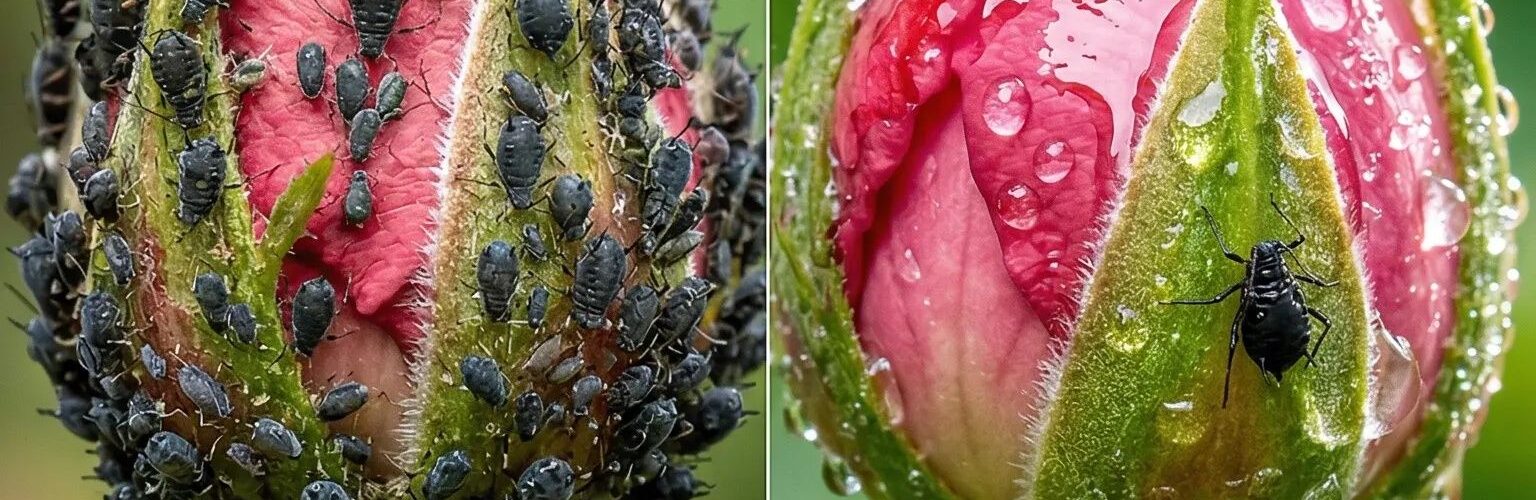
This March (March) date is truly groundbreaking. Right now, nature is waking up, and with it, so are the ants, who bring their “herds” of aphids to the young buds of trees. If you intervene correctly this weekend, you will interrupt their life cycle before they have time to multiply.
Here is a plan for one weekend that will save you liters of sprays during the summer:
- Mechanical barrier: Adhesive strips
This is absolutely the most effective step in March. Aphids rarely get to the trees on their own – they are brought there by ants, who protect them from ladybugs and collect sweet honeydew as a reward.
What to do: Securely attach sticky strips around the trunks of fruit trees (about 30–50 cm above the ground).
Why now: Ants are starting to forage. When you cut off their path to the crown, the aphids are left without “protection” and natural predators (such as predatory wasps or ladybug larvae) will nip them in the bud.
- Preventive oil spray
While the trees are not yet in full bloom (in the “mouse ear” stage), it is the ideal time to apply an ecological oil-based spray.
How it works: Oil (such as rapeseed or neem) forms a fine film on the bark that suffocates the overwintering eggs of aphids and other pests hidden in the cracks of the bark.
Recipe: Add 50 ml of oil and a few drops of ecological detergent to 5 liters of water (so that the oil combines with the water).
- The “smell” that aphids hate
Use this weekend to plant plants at the base of your trees that act as natural repellents.
Garlic and onions: If you plant them around the trunks now in March, their smell will repel aphids all season long.
Lavender and savory: Prepare flower beds under your trees. Their essential oils are “toxic” to aphids and they will avoid your garden.
March weekend schedule
💡 Don’t forget your natural allies
A garden without aphids is not a garden without insects. If you clean and prepare insect houses (insect hotels) this weekend, you will attract goldfinches and ladybugs. One ladybug larva can eat up to 4,000 aphids in its lifetime.
Final tip: If you already see the first aphids on young shoots, a strong stream of water from a hose is enough. Aphids are fragile – if a stream of water knocks them to the ground, they usually can’t get back up and die.
Would you like advice on how to make a homemade nettle infusion that works as a fertilizer and aphid spray in one?