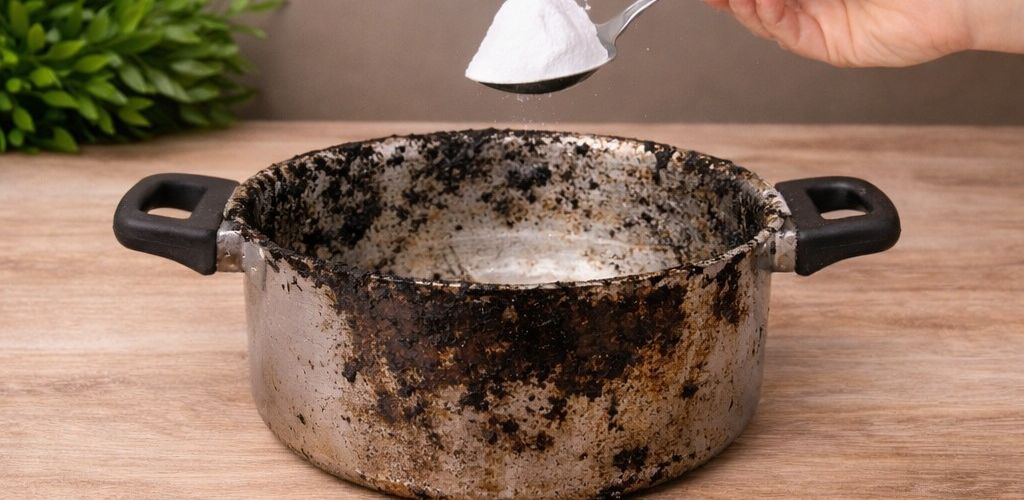
The bottoms of pots and pans are where grease meets extreme heat. The result is a baked-on black or brown layer that regular detergent just won’t come off. But if you use the right chemical reaction, you can clean the surface with almost no scrubbing.
Here’s a tried-and-true method that works on both stainless steel and cast iron, and will restore your cookware to its original shine.
🚀 The “Absorbent Wrap” Method (Most Effective)
This trick uses a combination of abrasive, acid, and time. It’s ideal for heavy-duty burn-on buildup.
What You’ll Need:
Coarse-grained salt (acts like sandpaper).
Baking soda (breaks down grease).
Dish soap (releases dirt).
White vinegar (activates baking soda and dissolves minerals).
Paper towels.
Step-by-step procedure:
Sprinkle the bottom: Turn the pan upside down and sprinkle salt and baking soda on the burnt areas.
Add detergent: Pour a little detergent onto the dry mixture and create a paste using circular motions (e.g. with an old sponge).
Wrap: Cover the entire bottom with paper towels.
Activate with vinegar: Spray the paper towels generously with vinegar. It will start to fizz – that’s when the burnt-on residue is released.
Time: Leave for 15 to 30 minutes. For extreme deposits, even an hour.
Remove: Simply “remove” the dirt with paper towels and rinse the residue with warm water.
📊 Cleaning agent comparison
Agent Strength of effect What is it best for?
Baking soda + Vinegar ⭐⭐⭐⭐ Common burns and grease.
Ketchup ⭐⭐ Copper and stainless steel (the acid in tomatoes will restore shine).
Toothpaste ⭐ Fine scratches and light dirt.
Wire brush (stainless steel) ⭐⭐⭐⭐⭐ Mechanical removal (be careful of scratches!).
💡 3 tricks for perfect results:
Ketchup trick for copper: If you have a copper bottom, rub it with ketchup and leave it for 10 minutes. The citric and acetic acid in ketchup will miraculously bring out the copper color.
Prevention: Never put a pan on the stove if its bottom is even slightly greasy from previous cooking. The heat will “bake” the grease and the next time it will be 2x harder.
Hot vs. Cold: Cleaning is always better when the pan is still slightly warm (not hot!). The grease is then softer and reacts better to the baking soda.
⚠️ Peer’s tip
If you have pans with a Teflon or non-stick surface, be careful when cleaning the bottom. If the cleaning mixture or the rough side of the sponge gets on the inside, you can irreversibly damage the non-stick layer. For these pans, it is better to use only a baking soda paste and a soft cloth.
Would you like to know how to clean the burnt inside of a pot, where food has stuck to the bottom so badly that even soaking does not help?