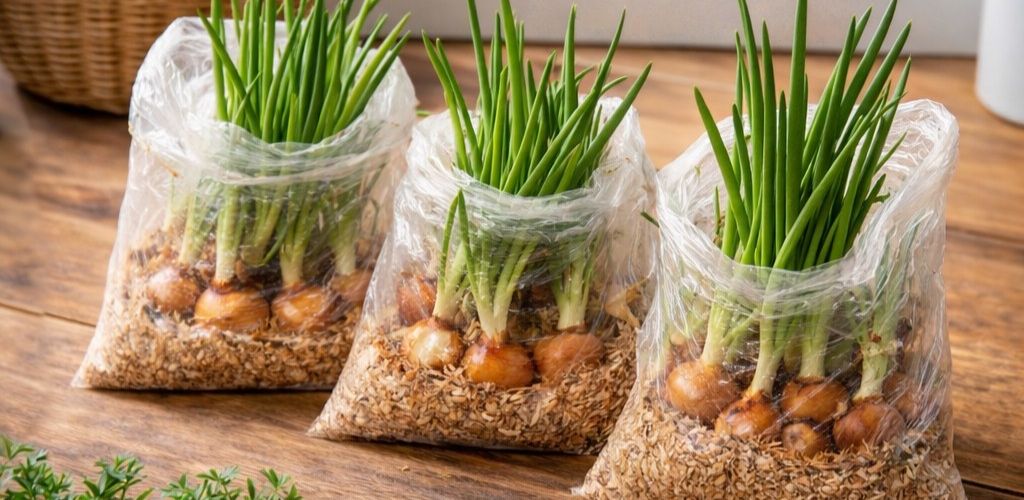
Here’s the legendary “plastic bag method”! An absolute hit for anyone who wants fresh spring onions (greens) right on their kitchen counter, even without a pot or soil.
The principle is ingeniously simple: You use the moisture and greenhouse effect in an ordinary plastic bag.
How to grow onions in a bag (step by step)
If you have ordinary microplastic bags and a few older onion pieces at home, you can get started right away:
Prepare the onions: Choose a small young plant or onions that are already starting to sprout. Cut off the green tops (about 0.5 cm) – this activates the onion, and the shoot will grow much faster and straighter.
Instead of soil: Use toilet paper or paper towels. Tear it into pieces, place it in a bag, and moisten it with water (it shouldn’t be swimming in it, just thoroughly damp).
Planting: Place the bulbs close together in the bag with the roots facing down (into the damp paper).
Greenhouse effect: Inflate the bag with your mouth (this adds CO₂, which plants love) and seal it tightly.
Waiting: Place the bag in a bright location (e.g., on a windowsill). Don’t open the bag for the first few days. Once the shoot reaches the top of the bag, open it and let the bulb grow freely.
Why does this work so well?
Humidity: An airtight, thin bag retains 100% humidity, allowing roots to form within 24–48 hours.
Warmth: The temperature inside the bag is a few degrees warmer than the room, simulating the ideal spring climate.
Nutrients: Onions have stored enough energy to produce their first green shoots using water and their own reserves.
A few pro tips for your “bag garden”: What to avoid: What to do instead: Too much water (the onions will start to rot and smell). Use sawdust instead of paper (if available), as it retains moisture even better. Direct midday sun (the onions will practically cook in the bag). You can add a pinch of ash to the water for potassium.
The great thing about this method is that it’s clean—no mud on the line, no leaky bowls. Once you’ve harvested the onions, simply discard the bag and paper (or compost them) and start a new batch.
Want tips on how to sprout watercress or mung beans in a similar way (without soil) for extra vitamins?