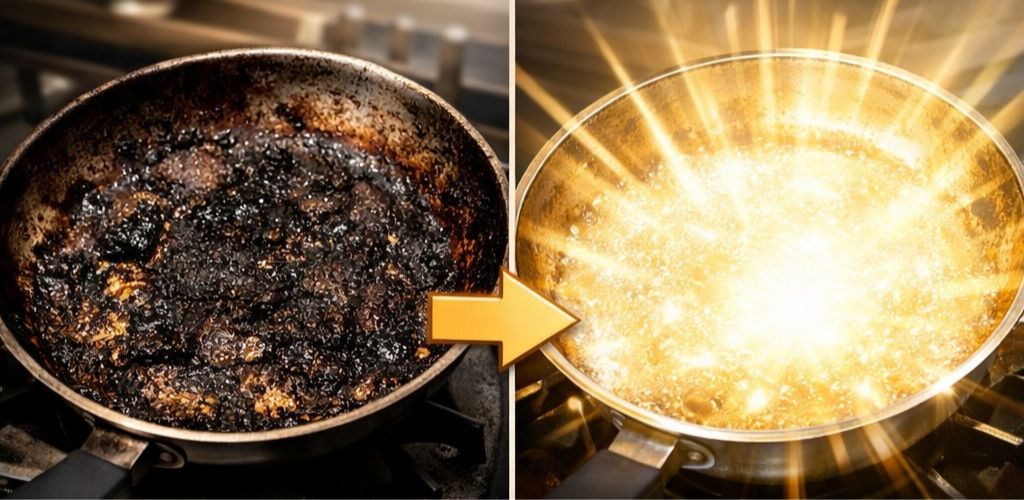
This combination is a true dirt and oxidation killer and should be in every household. If you want to impress your guests with its shine, we mean: cleaning copper and brass, or rescuing tarnished stainless steel and burnt-on dishes.
The chemical reaction between acetic acid and sodium chloride (salt) creates an environment that virtually eats away oxidation and grease in seconds.
Ingenious trick: Homemade polishing paste
Here’s the recipe for a mixture that restores shine like new:
125 ml vinegar
1 tablespoon salt
A little flour (for a drip-free paste – optional, but recommended)
What is it best for?
Copper and brass decorations: If you have old candlesticks, mortars, or copper pans at home that have tarnished black or greenish, rub them with this mixture. Let it sit for 5 minutes and rinse. They’ll shine like new gold.
Stainless steel pot bottoms: Do you have those rainbow stains or a burnt-on ring on the bottom of your pots? Salt and vinegar will clean them without the need for steel wool scrubbing.
Sinks and faucets: Removes limescale and gives stainless steel a deep shine that lasts longer thanks to the polishing action of the salt crystals.
Silver: It also works on tarnished spoons, but be careful—be more cautious with silver and don’t leave it on for too long.
How to achieve maximum wow factor?
Application: Apply the mixture to the surface with a sponge or cloth.
Polishing: Massage the surface in gentle, circular motions (the salt acts as a gentle abrasive).
Rinsing: It’s important to rinse everything thoroughly with clean water. Salt and vinegar are corrosive. If left on the metal, they will corrode it over time. Drying: This is the most important step! Polish the object with a dry microfiber cloth until it’s dry. This step will give it a brilliant shine.
Why is this method better than commercial cleaning products?
This mixture is not only inexpensive and environmentally friendly, but it also works instantly. You don’t have to wait for hours; you’ll see the results right away.
Warning: Do not use this method on painted metals (e.g., lacquered brass) as the lacquer could be damaged. It only works on clean metal.
Would you like my tip on how to use this mixture?