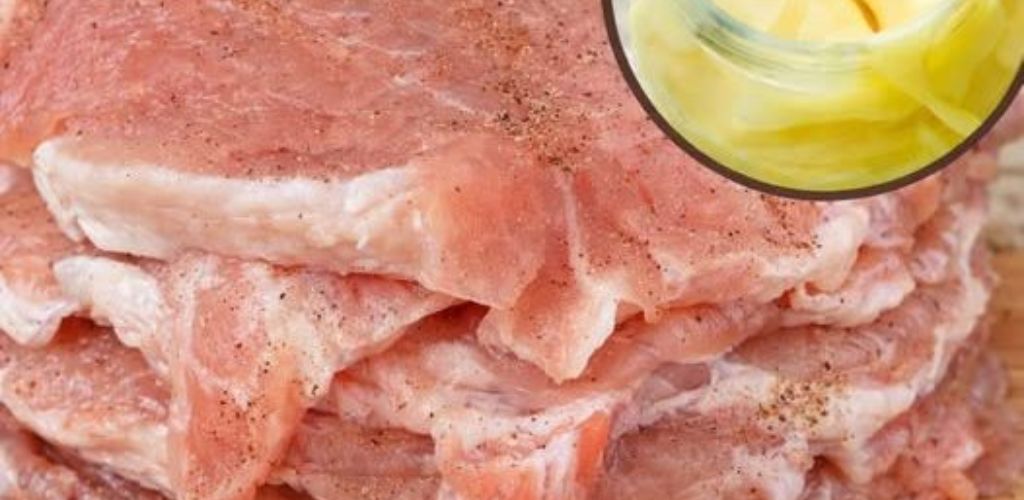
This culinary discovery will completely change your opinion about pork chops! Milk and cream are a thing of the past—we’re talking about an ingredient that works with natural enzymes and a specific pH level.
The ultimate secret to melt-in-your-mouth tender pork (even dry hams) is ordinary onion or mustard. But the “most secret” ingredient currently causing a sensation online is:
Pickle brine (pictured)
It might sound crazy, but it’s pure chemistry. The brine contains vinegar (acid), salt, and a spice mix (dill, mustard seeds). The acid in the brine breaks down the muscle fibers, the salt moisturizes the meat, and the spices provide an intense aroma.
How does it work? (Preparing “Butter” Pork Chops)
Marinate: Flatten the pork chops (neck or cutlets) and place them in a bowl.
Brine: Pour the brine over the chops so they are completely covered.
Time: Marinate in the refrigerator for at least 2 hours, ideally overnight.
Fry: Remove the meat, pat dry with paper towels (this is important to prevent the chops from falling apart), and coat in flour, egg, and breadcrumbs.
Other clever alternatives (if no brine is available):
Full-fat mustard: Rub the meat with it and let it soak in. Mustard contains vinegar and enzymes that tenderize the meat and add flavor.
Grated onion: Onions contain enzymes that break down tough fibers. Simply place a layer of grated onion between the pork chops and marinate for 3 hours.
White yogurt with a little baking soda: Baking soda (bicarbonate) changes the pH of the meat’s surface, preventing it from drying out during cooking.
Why does this work better than milk? While milk also tenderizes the meat, the brine or mustard actively “digests” it, ensuring juiciness that lasts even after cooking. The result is a steak that can be easily cut with a fork.
Quick tip: If you marinate the meat in pickle brine, don’t add any extra salt! The brine is salty enough, and the steaks would be too salty otherwise.
Would you like a trick you can add directly to the breadcrumbs to make them extra crispy and prevent them from absorbing so much oil?