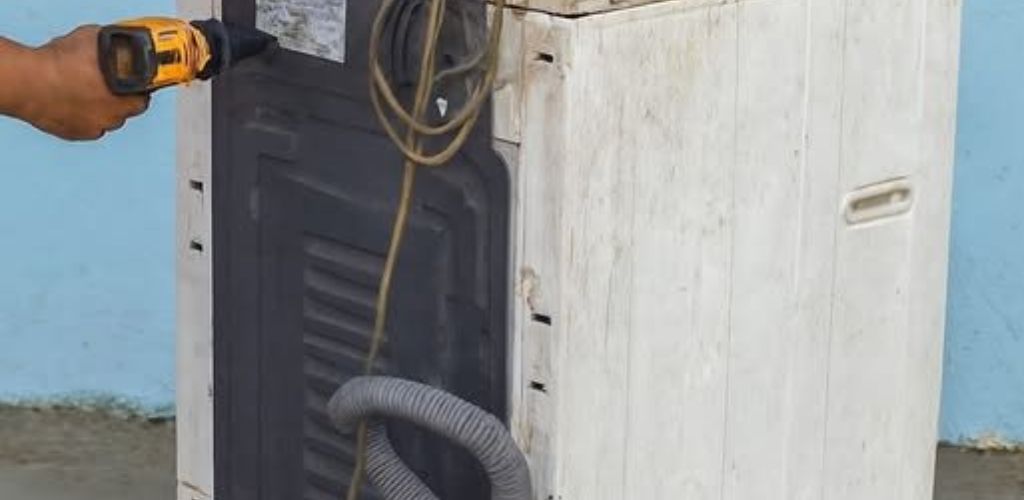
This sounds like the classic opening line for a YouTube video, but behind this clickbait lies a fascinating reality: An old washing machine isn’t just another “white goods” item, but a veritable treasure trove of spare parts for DIY enthusiasts and tinkerers.
Inside, you’ll find components that are often more expensive individually than what you’d get for the entire machine at a junkyard. Here’s what you’ll actually find when you open the casing:
🏎️ 1. The Universal Motor (The Heart of the Machine)
The most valuable part for hobbyists. Washing machine motors are extremely powerful and robust.
What you can make with it: A lathe, a disc sander, a large potter’s wheel, or even a motorized go-kart for the kids.
Why it’s special: A simple speed controller allows for precise speed control.
💎 2. The Stainless Steel Drum (The Design Object)
The inner drum is made of high-quality, rust-free stainless steel and is perforated with hundreds of small holes.
What you can make with it: Arguably the best fire bowl in the world (the holes ensure perfect ventilation and a beautiful play of light), a stylish coffee table, or a unique industrial-style ceiling lamp.
💎 3. The Porthole (The Ultra-Strong Glass Bowl)
The thick glass of the door is heat-resistant and virtually unbreakable.
What you can make with it: A perfect, shallow salad bowl or – for the truly creative – a “window” in a DIY sauna door or a small shed.
📊 The “Treasures” at a Glance
Component Material / Value DIY Potential
Drum High-quality stainless steel Fire bowl, side table, laundry basket.
Motor Copper windings, high-performance grinding machines, lathes, drives.
Concrete blocks, heavy-duty garden stepping stones, parasol base.
Electromagnetic pump for garden irrigation system.
💡 A tip for those who love order:
Have you ever seen the springs that suspend the drum? They are extremely strong. DIY enthusiasts often use them in their workshops to hang heavy tools in a space-saving way or to cushion garage doors.
⚠️ An important tip from your “Peer”:
Before you reach for the screwdriver, there are two things to consider:
The capacitor: Even when the machine isn’t plugged in, the start capacitor can store a dangerous electrical charge. Discharge it properly (or leave it alone).
Residual water: There is always some residual water in the system. Have towels ready before disconnecting the hoses!
Additional fact: Many modern machines (especially from brands like LG) have a direct-drive motor. This is essentially a giant ring magnet. Hobbyists love these motors for building highly efficient wind turbines to generate electricity.
Would you like a short guide on how to build one?