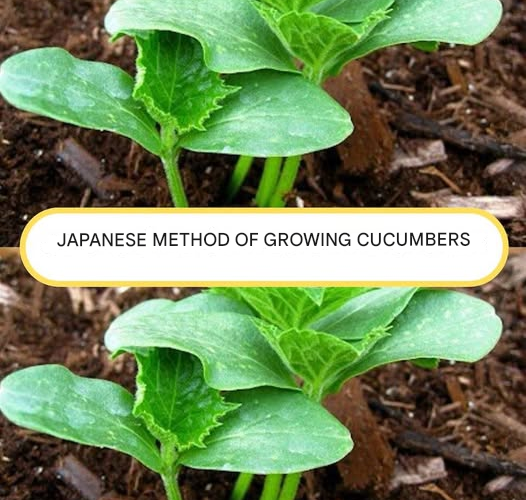
Japanese gardening techniques are known for their precision and ability to achieve maximum yields in the smallest of spaces. If you’re talking about a method that combines vertical growing, targeted pruning, and the promotion of healthy roots, then we’re probably talking about a game-changer.
Here’s an overview of why this method works so amazingly well:
Vertical Support and a “Clean Stem”
In Japan, cucumbers are rarely allowed to grow along the ground. Growing them on nets or strings at a height (often up to 2 meters) ensures:
Maximum air circulation: This is crucial in the fight against powdery mildew, which thrives in humid, stagnant air near the ground.
Light for every leaf: Better photosynthesis means a stronger plant and faster fruit ripening.
Strict Pruning
Many Slovakian gardeners hesitate here, but the Japanese are uncompromising:
The lower 30–50 cm: All side shoots and blossoms are removed. This way, the plant doesn’t concentrate its energy on the first, prematurely ripening cucumbers, but on developing a strong root system and a sturdy main stem.
Side Shoots: These are often only allowed to grow to the first or second leaf and then pinched off. This prevents the formation of an impenetrable thicket.
Ring-Shaped Fertilization and Mulching
Instead of applying fertilizer directly to the stem, the Japanese often use the method of fertilizing in furrows around the plant.
Rice Straw or Foil: The soil is covered to keep it moist and loose. Cucumbers have shallow roots that tolerate neither drying out nor overheating.
Grafting
If you have seen particularly robust seedlings, they may be grafted cucumbers. The Japanese often graft premium cucumber varieties onto pumpkin rootstocks (e.g., Cucurbita ficifolia).
The result: Pumpkin roots are resistant to soil diseases and can absorb nutrients, even in colder soils, that cucumbers typically cannot tolerate.
Pro tip: For beautiful, chemical-free leaves, try a Japanese spray made from fermented rice water or a milk mixture (water and milk in a 10:1 ratio). This alters the pH level on the leaf surface and prevents the germination of mold spores.
Are you specifically interested in grafting techniques, or would you like to know exactly how and when to pinch off the shoots for maximum yield?