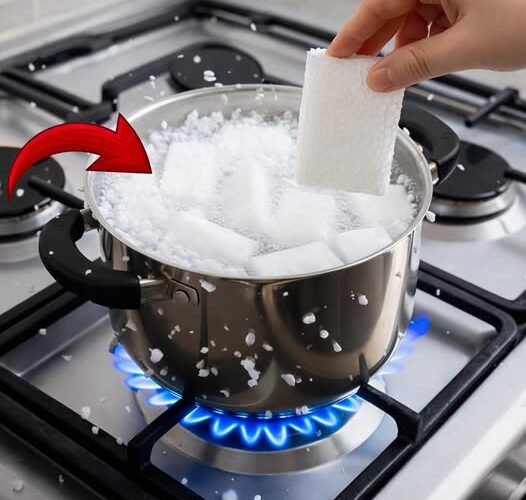
At first glance, this idea sounds like a brilliant “improvement” from the internet, but I have to warn you before you turn on the stove. Boiling Styrofoam at home to make money is a myth and, moreover, harmful to your health.
Let’s look at the facts with some distance, but also with the necessary seriousness:
Why doesn’t “boiling” Styrofoam work?
Chemistry doesn’t let us down: Styrofoam consists of 98% air. When heated, the air escapes, and only a small pile of plastic (polystyrene resin) remains. But even boiling it in water doesn’t make it any more valuable – it’s still plastic, just in a useless form.
…“` Toxic fumes: Polystyrene (expanded polystyrene) is made from pentane and contains styrene. When heated above a certain temperature, it releases dangerous fumes that are carcinogenic and irritate the respiratory system. The kitchen is not a laboratory. What’s the point? Recycling companies buy polystyrene in large quantities (tons), but only if it is clean and has been industrially processed. Homemade polystyrene is worthless to industry.
Is there any other useful use for old polystyrene?
If you don’t want to simply throw it in the recycling bin (where it legally belongs), here are some sensible uses:
Homemade glue or sealant: Dissolving polystyrene in a little acetone creates a thick, sticky mass. It used to be used for emergency roof repairs or bonding, but today there are much better and safer construction adhesives available. Drainage for flowerpots: Polystyrene does not absorb water. If you break it into small pieces and place it at the bottom of the flowerpot, it serves as an excellent and lightweight drainage layer.
Packaging filler: If you’re sending something by mail, old Styrofoam is ideal packing material.
Conclusion:
The idea that you can supposedly “make a lot of money” by boiling Styrofoam is unfortunately an internet scam. All you’ll gain is a ruined pot, an unpleasant smell throughout your home, and a headache from the fumes.
If you have larger quantities of Styrofoam at home (e.g., from insulation materials), it’s best to take it to a collection point. There, it will be professionally and safely recycled.
Do you have other materials at home that you’ve heard can be miraculously recycled? I’d be happy to look into it for you