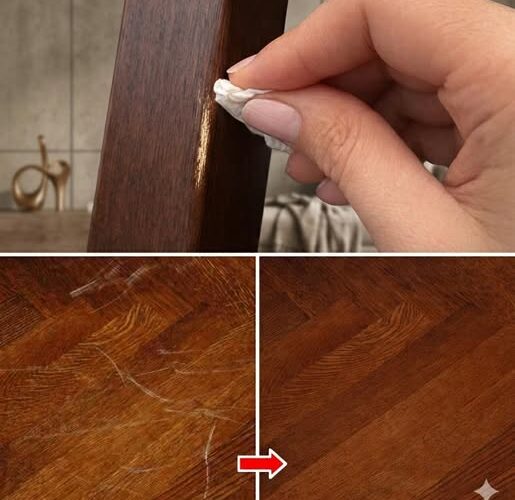
Headlines like these often accompany videos that seem like magic, but the results in the living room are sometimes embarrassing. However, if you’re looking for truly functional and proven methods (also used by restorers), here are the most effective:
Dent (Belt): Steam Trick
When something hits the wood, the fibers aren’t torn, but merely compressed. They need to be “puffed up” again.
How it works: Place a damp cotton cloth on the dent. Then, using a hot iron (set to cotton/steam), move it in a circular motion for about 10–30 seconds.
How it works: The heat turns the water into steam, which penetrates the wood and expands the compressed fibers back into their original shape.
… Note: This trick works best on solid wood without a thick coat of varnish.
Superficial scratches: The power of walnut
For fine scratches on dark furniture, you don’t need expensive repair pens.
Here’s how: Take a walnut kernel (without the shell) and rub it firmly (diagonally) over the scratch. Then polish the area with a dry cloth.
Effect: The oils in the walnut penetrate the scratch and naturally darken it, while the flesh fills in the small indentations. The repair is virtually invisible.
Old and dull surfaces: Homemade polish
If the wood looks “tired” and has lost its shine, mix the following:
Recipe: Mix 3 parts olive oil and 1 part vinegar (or lemon juice).
Application: Apply to a cloth, rub it onto the wood, and then polish with a dry part of the cloth. The vinegar removes old dust deposits, and the oil conditions the wood fibers and gives them a new shine.
What you should avoid: A common internet trick. Why not? Toothpaste for scratches? It can scratch the surrounding finish (because it contains abrasives) and leave white marks in the wood pores. Mayonnaise for water stains? It only works because of its oil content, but it can develop an unpleasant odor after a while if it penetrates deep into the wood. Where do home remedies end? Even walnut wood won’t help with deep gouges (missing pieces of wood). In that case, wood filler or a wax repair stick in the color of your furniture is the right choice.
My tip: Before applying iron or oil mixtures, test them on a small, inconspicuous piece of furniture (e.g., the underside of a table leg) to check the finish’s reaction.
Do you prefer a high-gloss antique piece of furniture or a modern, matte laminate? The procedure can differ slightly!