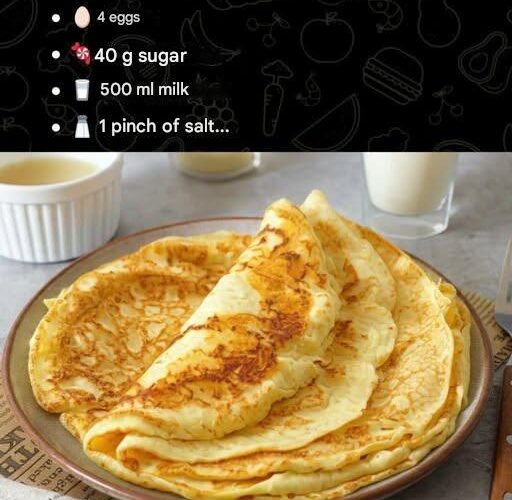
Grandma Helga’s pancakes aren’t those thick, cakey American stacks. These are the classic European-style Palatschinken (or Crepes)—thin, golden, and incredibly flexible.
The “Helga Secret” to making them “melt-in-your-mouth” is a splash of sparkling water in the batter. The carbonation creates tiny air pockets that keep the pancakes light instead of rubbery.
🥞 Grandma Helga’s “Golden Veil” Pancakes
The Ingredients
- 1 cup (125g) All-purpose flour
- 2 Large eggs
- 1 cup (250ml) Whole milk
- ¼ cup (60ml) Sparkling water (The “Lacy Edge” Secret)
- 2 tbsp Butter, melted (plus more for the pan)
- 1 tbsp Sugar
- Pinch of salt
The 3-Step Preparation
- The Smooth Base: Whisk the flour, sugar, and salt in a bowl. Make a well in the center and add the eggs and milk. Whisk from the center outward until the batter is smooth (no lumps!).
- The “Bubbles”: Stir in the melted butter and the sparkling water.Note: Let the batter rest for at least 15 minutes. This relaxes the gluten and ensures the pancakes don’t tear.
- The Sizzle: Heat a non-stick skillet over medium-high heat with a tiny dot of butter. Pour in a small ladle of batter and tilt the pan immediately to coat the bottom in a thin, even layer.
- Cook for 1–2 minutes until the edges lift easily.
- Flip and cook for 30 seconds on the other side.
💡 Why This Recipe Wins
- The Texture: Because they are thin, they develop beautiful “lace” patterns on the surface.
- The “Rollability”: These are meant to be rolled up with jam, Nutella, or sweetened cottage cheese. They won’t crack or break.
👵 Grandma’s “Speedy” Serving Hacks
- The Apricot Classic: Grandma Helga always used Apricot Jam. Spread a thin layer, roll it up, and dust heavily with powdered sugar.
- The Savory Twist: If you skip the sugar in the batter, these are perfect for wrapping around ham and cheese for a quick lunch.
- The Reheat: These stay soft! You can stack them on a plate, cover with foil, and they’ll stay perfect for the next morning.
🥧 Pro Tip for the “First Pancake”
Grandma always said: “The first pancake belongs to the pan.” It’s usually a bit ugly because the pan temperature is stabilizing. Don’t worry about it—just eat it yourself while you cook the rest!