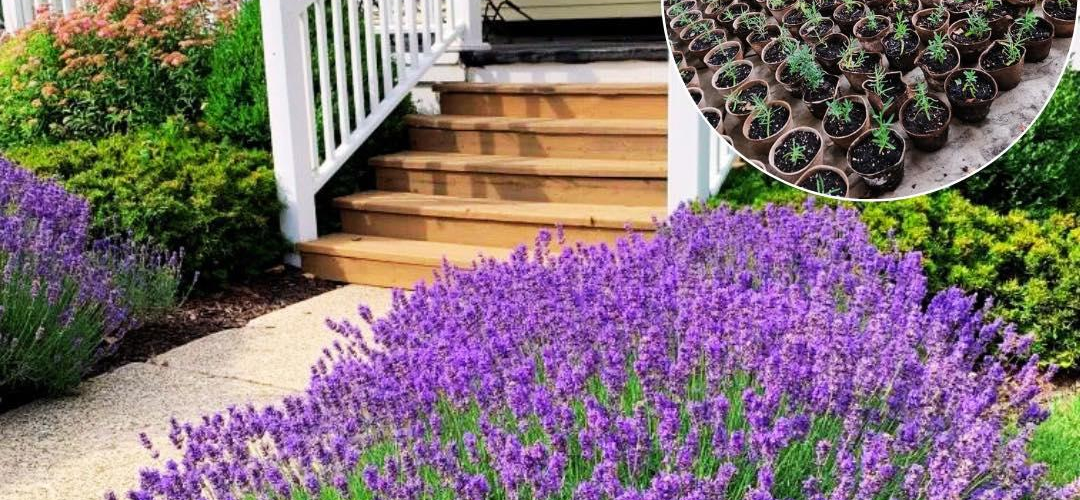
Growing lavender from cuttings is not only cheaper than buying seedlings, but you are also sure that the new plant will have exactly the same characteristics (scent and color) as the original bush.
If you want to see the first flowers during the first season, the key is timing and stimulation of the root system.
📅 When to start? (Timing is important)
In order for lavender to bloom this year, you need to start in early spring (late February – March). We use so-called soft spring cuttings, which have the greatest growth power.
✂️ Quick rooting procedure
Choosing a cutting: Find a healthy plant and cut a young, green shoot about 10–15 cm long, which does not yet have buds. The cutting should be slightly firm at the bottom, but not completely woody.
Preparation: Remove the leaves from the bottom half of the cutting. You will be left with a bare stem, which you can stick into the ground. Trim the top leaves back by a third – this will prevent the plant from losing moisture through evaporation and will focus its energy on the roots.
Homemade stimulator: Dip the bottom of the stem in honey or cinnamon. Both substances act as a natural fungicide and stimulator, preventing rot and accelerating root formation.
Substrate: Use a mixture of garden substrate and sand (in a 1:1 ratio). Lavender hates soggy soil; sand will provide the necessary drainage.
🚀 How to speed up flowering in the first season?
To get flowers in just a few months, you need to “trick” the plant and give it ideal conditions:
Mini-greenhouse: Cover the pot with the cuttings with a cut-off plastic bottle or bag. The moist air will speed up rooting to 2–3 weeks (instead of the usual 6).
Heat from below: If possible, place the pot on a windowsill above a radiator. The heat stimulates the roots to become more active.
Transplant to the sun: As soon as the cuttings resist a gentle pull (they have roots), transplant them to the sunniest place in the garden. Lavender needs at least 6–8 hours of direct sun to produce flower buds in the first year.
Calcium: Add a handful of crushed eggshells to the planting hole when planting. Lavender loves alkaline soil, which will give it the strength to bloom.
📊 Comparison of propagation methods
Method Flowering speed Difficulty
Seeds 2nd to 3rd year High (needs stratification)
Cuttings (March) 1st year (late summer) Medium
Division of clumps 1st year Risk of the entire plant dying
💡 Tip for a rich bush
Although you want flowers as soon as possible, when the first buds appear on a small plant, try cutting them halfway through the cuttings. The plant will branch out and next year it will have three times as many flowers. Those you leave will delight you with their fragrance this August!
Interesting fact: Narrow-leaved lavender (Lavandula angustifolia) is the most grateful for flowering from cuttings and, moreover, it overwinters without any problems in our country.
Would you like to know how to make lavender syrup that tastes exactly like summer in Provence?