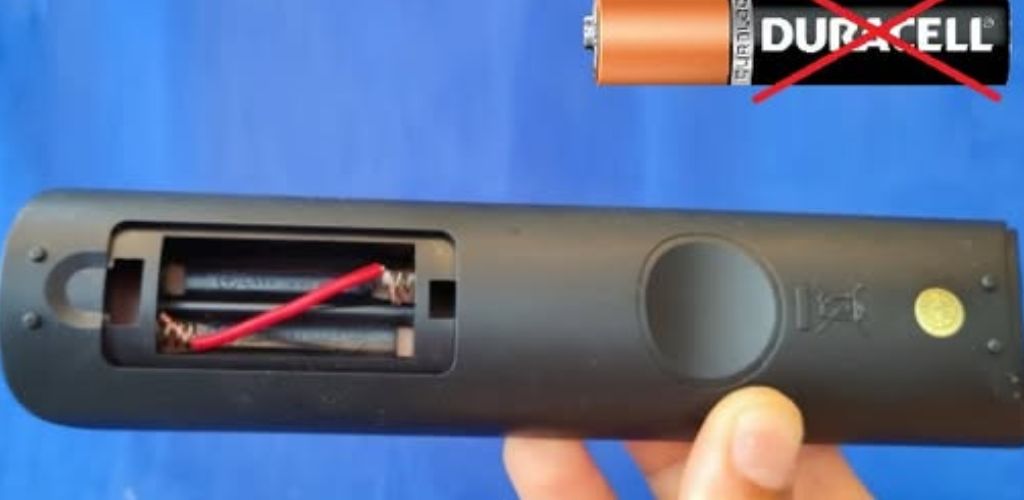
This idea sounds like it belongs in the category of “garage inventions” that promise energy independence. Before you start disassembling electronics, let’s take a look at what’s behind this popular DIY trend.
It’s mostly about turning ordinary devices into something “eternal” using things you already have at home. Here are the two most common ways DIYers solve the battery dilemma:
- Switching from batteries to “cable” (Adapter instead of batteries)
This is the most common trick for devices that stand in one place (clocks, weather stations, LED strips).
Principle: You replace the batteries with an old 5V adapter from your phone.
DIY trick: Since one AA battery is $1.5V, two batteries in series are $3V. If you use a 5V USB charger, you need a simple Step-Down converter (a module that you can buy for a few cents) to reduce the voltage to the required level.
Result: The device runs on mains power and you never have to buy a battery again.
- “Potato” or “Vinegar” Battery (School Experiment)
If you’ve seen videos where fruit powers a clock, this is a classic galvanic cell.
What you need: Copper wire (anode), galvanized nail (cathode), and electrolyte (lemon, potato, or a glass of vinegar).
Reality: This is a great experience for kids, but in practice it’s only enough to power a calculator or a simple LCD display. You’d need a whole box of potatoes for a remote control.
Comparison: Is it worth it?
Solution Advantage Disadvantage
Rechargeable batteries (NiMH) The most environmentally friendly and safest. Higher initial investment.
Conversion to USB network Completely maintenance-free. The device loses mobility (it is on a cable).
Homemade (fruit/vinegar) Fun and educational. Very low power, impractical.
💡 A real “Pro Tip” for DIYers:
If you don’t like buying batteries for your remote controls, try buying lithium AA batteries (not rechargeable, but disposable lithium). They are more expensive, but they will last 7 to 10 years in the remote control and will never leak, thus damaging the contacts.
Safety warning: Never try to “charge” classic alkaline batteries in a charger not designed for this. There is a risk of leakage or explosion. Also, be careful when connecting old Li-ion cells from laptops – without protective electronics, they are small explosives.
Do you have a specific device at home (like an old radio or a toy) that “eats” batteries too quickly? I can advise you on how to convert it to charge via USB-C. Would you like a tutorial?