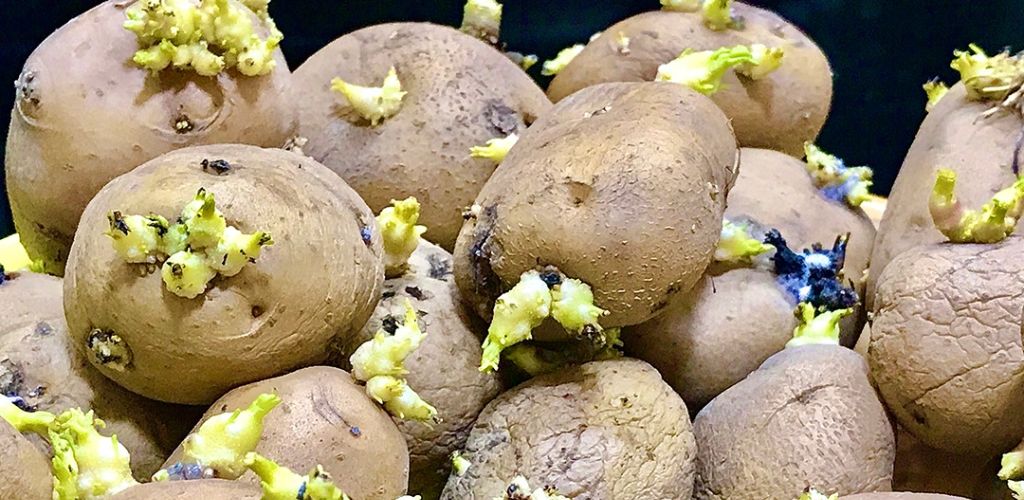
It’s frustrating – you buy beautiful potatoes and two weeks later they look like a science experiment with long white sprouts. The problem is that potatoes are living organisms that are just waiting for the right signal to start growing.
The “fantastic trick” that you have probably discovered and that actually works on the basis of natural chemistry is this:
🍎 The Secret Named Apple
If you put one apple in a bag or box of potatoes, you will significantly slow down their germination.
Why does it work?
Apples emit ethylene (a gas that accelerates the ripening of other fruits, such as bananas). However, in potatoes, ethylene paradoxically has the opposite effect – it acts as a natural inhibitor that keeps potatoes in a state of “sleep” and prevents them from sprouting.
Other golden rules for long shelf life:
Apart from apples, there are three critical mistakes that almost everyone makes:
Stop onions! This is the most common mistake. Never store potatoes right next to onions. Onions produce gases and moisture that cause potatoes to sprout and soften in record time.
Darkness is the key: Light (even artificial light) activates the production of chlorophyll and poisonous solanine in potatoes. If a potato starts to turn green, it is a signal that it is becoming toxic.
Non-breathable plastics: If you leave potatoes in a plastic bag from the store, they will “suffocate” with their own moisture and start to rot. Move them to a paper bag or mesh bag.
Comparing storage methods
Method Result Why?
Potatoes + Apple ✅ Fresh and firm for a long time Ethylene from the apple inhibits germination.
Potatoes + Onion ❌ Rapid germination and rot Interaction of gases and moisture.
Potatoes in the light ❌ Greening Formation of dangerous solanine.
Potatoes in the refrigerator ⚠️ Change in taste to sweet Starch turns into sugar at low temperatures.
A little tip: If the potatoes already have small sprouts, you can still eat them, but peel the sprouts thoroughly and peel the potatoes deeper. However, if the potato is already soft, shriveled or noticeably green, it belongs in the compost.
Would you like to know how to properly store the rest of the cut apple so that it does not turn brown when you use it as a “guardian” for your potatoes?