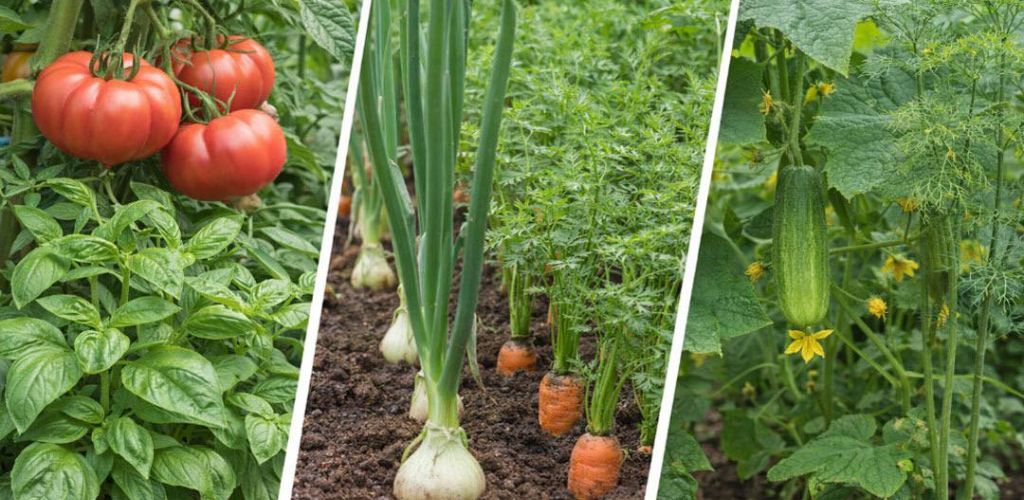
In gardening, this is called co-planting (or polyculture). It’s not magic, but pure biology: some plants help each other by excreting substances, repelling pests, or sharing nutrients.
To get the most out of your beds in 2026, you should plant these three pairs side by side.
- Tomatoes and Basil (Taste and Protection)
This is the most famous pair in the garden, and it works just as well on the plate as it does in the ground.
Why it works: Basil’s strong scent masks the smell of tomatoes, confusing pests like cabbage loopers and aphids. Many gardeners also swear that tomatoes grown near basil taste sweeter thanks to the transfer of terpenes.
Bonus: Basil doesn’t dry out as quickly in the shade of tomatoes.
- Carrots and Onions (Mutual Guard)
These two plants are like “bodyguards” that cover each other’s backs.
Why it works: Carrots suffer from powdery mildew and onions from onion blight. Onions repel carrot pests with their aroma, and carrots repel onion pests with their aroma.
Space efficiency: Onions tend to grow upwards and carrots downwards, so they don’t compete for space and nutrients.
- Cucumbers and Dill (Pollination Booster)
If you want cucumbers that aren’t bitter and there will be a lot of them, plant dill next to them.
Why it works: Flowering dill attracts a huge number of pollinators (bees, bumblebees) and beneficial insects (beetles) to the garden, which eat aphids. This ensures that each flower is pollinated, which directly leads to a higher yield.
Health: Dill slightly improves the overall resistance of cucumbers to diseases.
Overview of the benefits of planting together
Pair Main benefit Secondary effect
Tomato + Basil Fewer pests Better taste of fruits
Carrot + Onion Protection from larvae Saving space on the bed
Cucumber + Dill Massive pollination Natural regulation of aphids
An old Indian secret: “Three sisters”
If you have more space in your garden, try the legendary trio: Corn, Beans and Pumpkin.
Corn serves as a support for the beans.
Beans fix nitrogen from the air and fertilize the soil with it for the other two.
Pumpkins cover the soil with their large leaves, retaining moisture and preventing weeds from growing.
Gemini tip: When combining plants, don’t forget to water them well. Even if the plants get along, they are still neighbors who have to share the “refrigerator” (nutrients in the soil).
Are you wondering which plants “hate” each other and should never grow together (for example, why not put onions with beans), or do you want advice on planning your beds for this season?