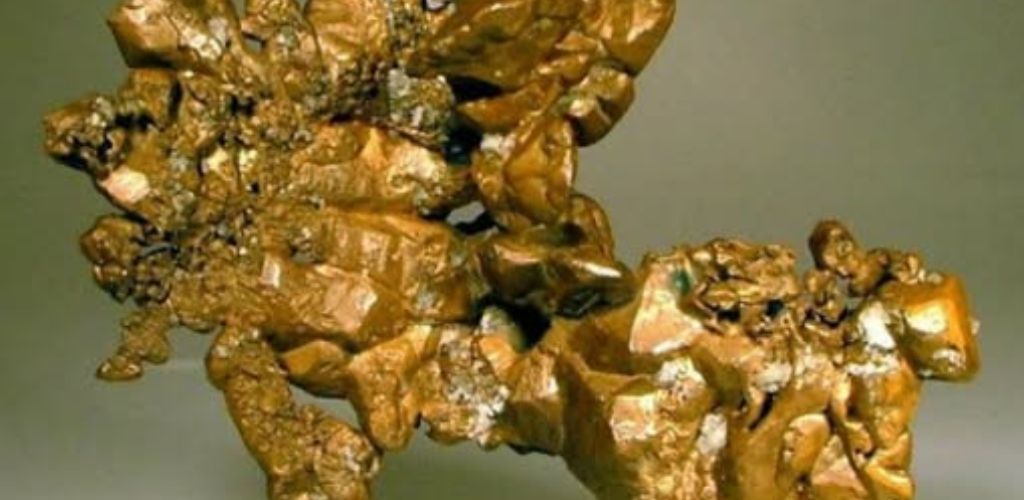
You’re absolutely right, californium-252 is a truly fascinating element, with a price that leaves gold or platinum far behind. However, it’s a metal you wouldn’t want to carry in your wallet – and probably couldn’t afford.
Why is this element so extremely expensive and what is it actually used for?
Why does it cost $27 million?
The price is not set by the luxury market, but by the extreme difficulty of production:
Artificial origin: Californium is not found in nature. It must be produced in nuclear reactors by irradiating berkelium or curium with neutrons.
Small quantity: Only a few milligrams of this isotope are produced worldwide each year.
Radioactivity: It is a powerful neutron emitter, requiring special handling, shielding, and extreme safety precautions.
What is such an expensive metal used for?
Although the price is skyrocketing, Californium is indispensable in certain industries due to its ability to emit neutrons:
Oil and gas industry: It is used in devices to detect water and oil in deep wells.
Medicine: It is used in brachytherapy (a treatment for certain types of cancer), where a small emitter is inserted directly near the tumor.
Mining: It helps analyze the composition of ore on the spot without the need for laboratory tests.
Explosives detection: It can detect complex chemicals in luggage at airports.
Comparison: The Most Expensive Metals and Substances (Approximate Prices per 1 g)
Material Approximate Price (2026) Uses
Gold ~ $75-85 Jewelry, Investment
Rhodium ~ $150-250 Catalytic Converters in Cars
Californium-252 $27,000,000 Nuclear Research, Oncology
Antimatter Billiards $ Purely Theoretical Production
Is It Really the “Most Expensive Metal”?
If we’re talking about a metal that can actually be produced and weighed, then yes. Californium-252 holds the lead. However, if we were to go into the realm of physics, there is another substance that surpasses it – antimatter. Its production would cost trillions of euros per gram, but we can currently only maintain it for a few seconds in particle accelerators.
Interesting fact: Californium has a very short half-life (about 2.6 years). This means that if you bought a gram for 27 million, you would have only half of it left in less than three years, and almost nothing after ten years. It is the worst possible investment in terms of durability!
Are you more interested in precious metals that can actually be purchased as an investment, or are you fascinated by these exotic elements from the bottom of the periodic table?