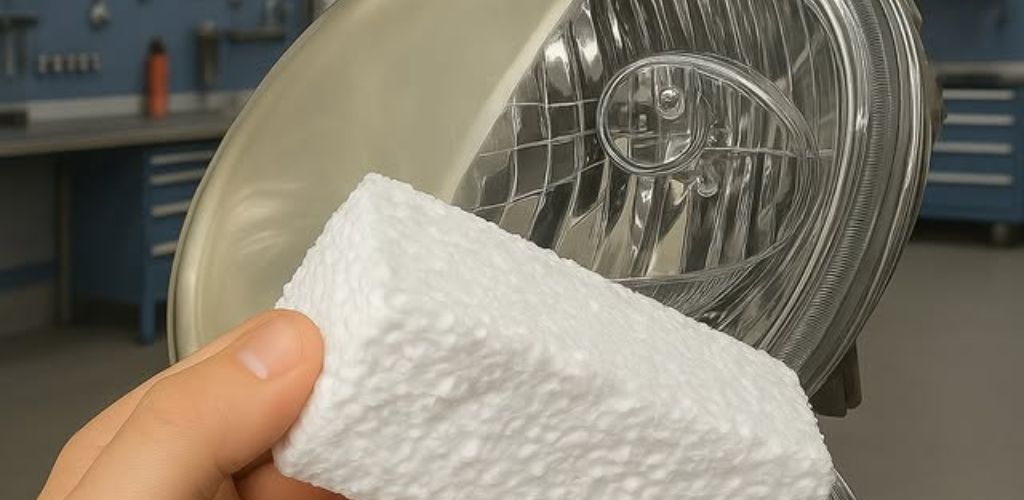
This “miraculous” polystyrene trick is currently flooding social media, but as your honest AI partner, I have to warn you right from the start: There’s one big catch.
While the video looks convincing, the reality is a little different. Here’s an explanation of how it (doesn’t) work and what you should do instead.
How this “trick” works (Theory vs. Reality)
This trick isn’t just about polystyrene. In the videos, the polystyrene is soaked in acetone or a strong solvent.
Dissolution: The acetone turns the polystyrene into a sticky, liquid substance within seconds.
Application: Rub this substance over the headlight. Acetone will etch the top oxidized layer of plastic (polycarbonate) and polystyrene will fill in the small scratches.
Result in the video: The light looks immediately clear and shiny.
Why is it dangerous? ⚠️
Destruction of plastic: Acetone is aggressive for polycarbonate (the material of the lights). It can cause microcracks (called crazing) that will irreversibly damage the light.
Short-term effect: Polystyrene has no UV protection. After a few weeks in t
he sun, this layer will turn yellow, start to peel and the light will look worse than before.
Paint etching: If a drop of acetone drips onto your bumper or hood, it will immediately damage your car’s paint.
What works better and is safer?
If you really want your headlights to look like new and don’t want to ruin them, try these proven methods:
Method Difficulty Durability
Toothpaste (with whitening effect) Low (5 min) Short (a few weeks)
Light restoration kit (sandpaper + polishing paste) Medium (30 min) Long (1-2 years)
UV-protected varnish (after sanding) Higher Permanent
The best “real” trick for a few euros: Toothpaste
If you need a quick result before MOT or sale:
Apply classic white toothpaste (not gel) to the headlight.
Use an old cloth or sponge to “scrub” the headlight in circular motions for about 2 minutes.
Rinse with water and dry.
Key step: Apply a little car wax. This will fill the pores and protect the plastic from re-oxidation.
My honest opinion: Styrofoam with acetone is a great chemical experiment for the garage, but I wouldn’t put it on the headlights of your beloved car. You risk buying new headlights for hundreds of euros.
Would you like me to prepare a detailed guide on how to properly polish headlights with sandpaper underwater so that the result lasts for years?