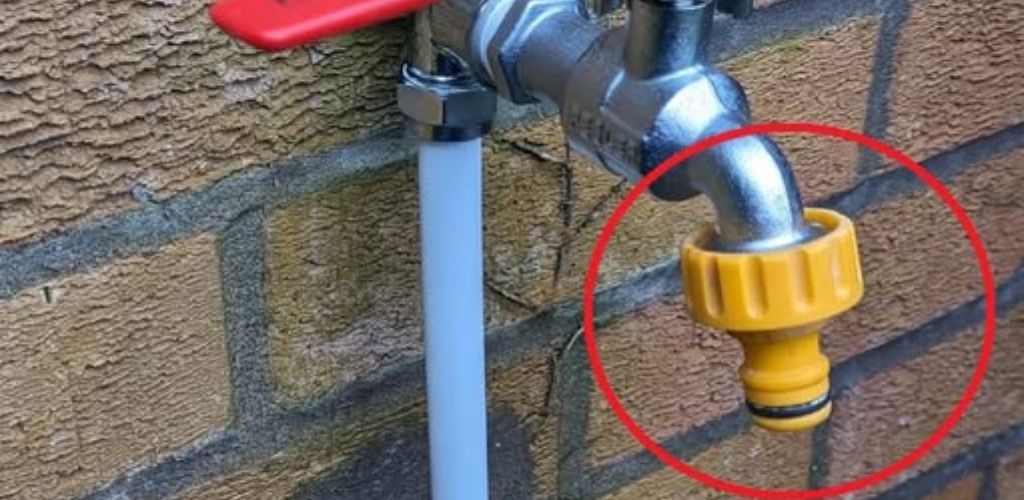
If you’ve ever wondered why old cast iron garden keys (taps) have that specific shape or why experienced gardeners perform special rituals with the valves, it’s not just about turning on the water. That “secret” is a mixture of physics, property protection, and ingenious design that our ancestors left us.
Here are the three biggest secrets that your garden key hides:
- The Secret of the “Anti-Freeze” Mechanism
Many people think that the valve they turn is right where the water flows out. However, with modern anti-freeze valves, it’s different.
The real secret: The seal and the valve itself are located deep in the wall of the house (sometimes up to 30 cm deep).
Why: A long rod connects your handle to a valve inside the insulated wall. When you close the faucet, any remaining water in the pipe flows out by gravity. If you leave a hose connected to the faucet in the winter, this secret stops working, the water freezes, and the pipe inside the house bursts.
- The Siphon Effect and Drinking Water “Contamination”
This is a secret that plumbers know, but few others do. The garden faucet is a critical point where your drinking water can become contaminated.
What happens: If you leave the hose submerged in a swimming pool or fertilizer barrel and the pressure in the public water supply drops, a backflow (siphon) can occur.
Solution: Quality garden faucets have a built-in aerator (vacuum breaker). A small hole under the cap above the valve is used to suck air and not dirty water from your hose back into the kitchen faucet in the event of a vacuum. - Hidden protection against water thieves
Do you suspect that someone is watering your garden from your faucet at night?
The trick with the removable head: Many garden wrenches are designed so that the upper nut holds the entire handle only on the square.
The secret: Just loosen one screw or nut, take the handle (“wrench”) home with you, and the faucet cannot be opened without special tools. There are also versions with a magnetic wrench that will not turn the valve without the right magnet.
💡 Pro maintenance tip: “Bleeding” the valve
If your wrench is dripping in the summer, most people force it to tighten. But this destroys the rubber seal.
The secret to the repair: Try opening the valve and letting the water flow fully for at least 10 seconds. Often, there is just a small stone or piece of rust from the pipe stuck under the seal, which the water will wash out and the valve will seal again without effort.
Table: What is your faucet telling you?
Symptom What is really happening? Solution
Whistling when turning on Loose seal vibrates in the water flow Replace the rubber band for 10 cents
Water sprays from under the handle Worn packing (shaft seal) Tighten the large nut under the handle
Water still flows after closing Destroyed valve seat Milling the seat or replacing the valve
Do you have a problem with the hose not fitting properly on your garden wrench in the summer due to a stripped thread? I can advise you on how to fix it without replacing the entire faucet