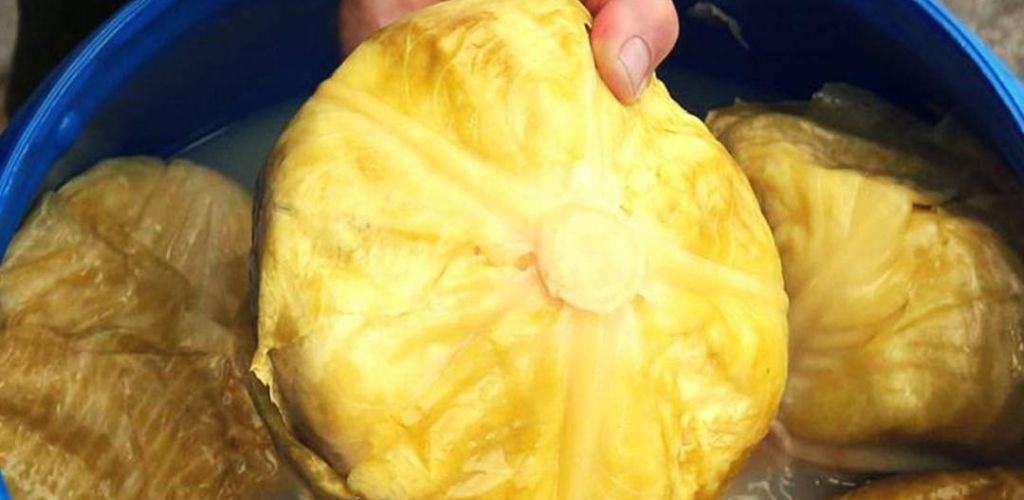
Here’s a detailed article on how to prepare pickled cabbage (the classic varza murata) according to tradition, ideal for both sarmale and crisp salads.
The Perfect Guide to Pickled Cabbage: For Sarmale and Salads
Picking whole cabbage is an art that requires patience and a few little secrets. The end result should be a cabbage with flexible leaves, a golden color, and a balanced acidic flavor. Here’s how to get the most out of your natural fermentation.
- Choosing the ingredients
For a perfect result, not all cabbages are created equal:
The Cabbage: Choose autumnal cabbages, preferably with thin leaves and not too compressed (they should be slightly “springy” to the touch).
Salt: Use only coarse, whole-grain salt (not iodized), which is essential for proper fermentation.
Seasonings: For an authentic flavor, add dried dill sprigs, horseradish root (which keeps the cabbage crunchy), peppercorns, and, if you prefer a golden yellow color, a handful of corn kernels or quince slices.
- The Recipe (Brine Dosages)
The golden rule for brine is concentration:
30 grams of salt for every liter of water.
(Example: for 10 liters of water, you will need 300g of salt.)
- Preparation Method (Step by Step)
Step 1: Cleaning and Scoring
Remove the first outer leaves of the cabbage if they are damaged. Using a sharp knife, remove the central core, creating a deep indentation. Pour a teaspoon of salt into this hole: this will help the cabbage core ripen along with the outer leaves.
Step 2: Arrangement in the Container
At the bottom of a barrel or a large food-grade plastic (or glass) container, arrange half of the herbs (dill, horseradish strips, pepper). Arrange the cabbages with the core hole facing up. Nestle the cabbages together tightly and add the remaining herbs to the empty spaces.
Step 3: The Brine
Dissolve the salt in the cold water, stirring well until completely dissolved. Pour the liquid over the cabbages until they are completely covered. It is essential to place a weight on top of the cabbages (a heavy plate or a clean stone) to keep them immersed in the liquid.
Step 4: “Transferring” (The Secret of Transparency)
For the first two weeks, every 2-3 days, it is necessary to “aerate” the brine. You can do this by using a hose to blow air into the liquid or by decanting some of the liquid and pouring it back in. This prevents the brine from becoming cloudy or viscous.
- Maturing Times
In a cool place (cellar or balcony), the cabbage will be ready in about 4-6 weeks, depending on the temperature.
For the Sarmale: The leaves will have become translucent and soft, perfect for rolling without breaking.
For the Salad: Simply cut the cabbage into thin strips, add a drizzle of olive oil and a pinch of pepper or paprika. No need to add any more salt!
Extra Tips
Horseradish: Don’t forget it! It’s the ingredient that keeps the cabbage from becoming mushy.
Check: If you see a white film forming on the surface (floret), remove it immediately with a slotted spoon and clean the edges of the container.
Happy working and enjoy your homemade sarmale!