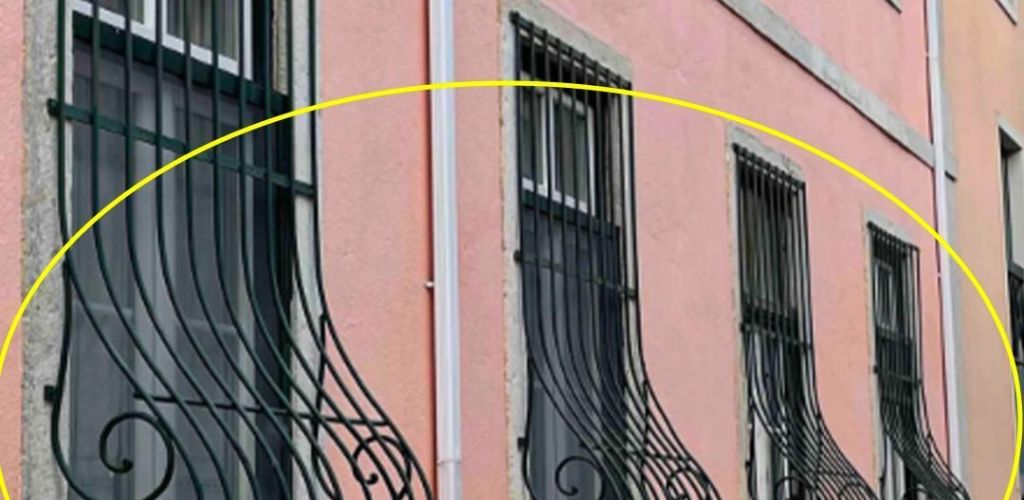
So this is a classic “clickbait” introduction that has been spreading like wildfire on social media in recent years! It’s usually accompanied by a photo of old windows or specific niches.
If you’re referring to those curved (convex/bulging) glass panes that look like “bubbles” (known as Crown Glass in English), the reason is actually much simpler than some magical secret, but all the more interesting from the perspective of the history of the craft.
Here’s the solution that you’ll usually find in those “comments” (unless it’s a scam):
So why are the panes convex?
Technological limit (so-called “bull’s eye”): Before the invention of modern flat glass (float glass), panes were made by blowing a large glass ball, which was then spun. Centrifugal force created a flat disk. In the middle, where the glass rod (whistle) was, however, a thick, curved knot remained – the “bull’s eye”.
Virtue out of necessity: This central glass was the cheapest and lowest quality. Originally, it was only used by poor people who didn’t mind that you couldn’t see out through it and that it distorted the light.
Today’s paradox: While in the 18th century you would want to replace such a window with expensive flat panes as soon as possible, today these curved panes are extremely rare and expensive, as they have become a symbol of historical luxury and monumental value.
Or is it a different shape?
If you meant the curved corners of airplane windows, there is a reason that is downright vital:
Material fatigue: Old airplanes (e.g. the de Havilland Comet) had square windows. But enormous pressure was concentrated in the corners, which led to cracking of the fuselage and tragic accidents. The curved shape distributes this pressure and prevents catastrophe.
Did I hit on the reason that surprised you so much, or did you come across another architectural curiosity?