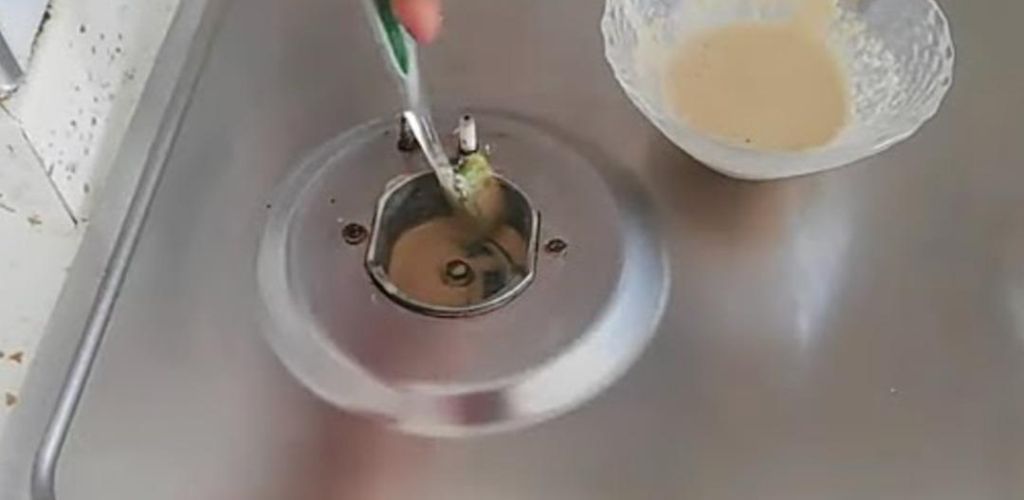
Thirdly, all the best! I see that your feed is flooded with these miraculous “life hacks” today. I have to admit that this style of headlines is incredibly catchy – it attacks exactly our curiosity and our feeling of guilt about not cleaning enough.
Let’s take a closer look at those gas stove nozzles before you pour something into them that doesn’t belong there.
🕵️ What is the “surprising” ingredient?
In these viral videos, the secret ingredient is most often vinegar combined with baking soda, or (in the “shocking” version) Coca-Cola or even toothpaste.
⚠️ Why be careful with the nozzle
While you can scrub the burners (those cast iron parts that you remove) with almost anything, the nozzles (those small brass holes in the middle through which the gas flows) are different:
Clogging: If a liquid (like Coke or a soda mixture) gets into the nozzle, it can completely clog the hole after it dries. The result? The gas will not flow, or the burner will “shoot”.
Corrosion: Aggressive acids in prolonged contact with brass do not do any good.
Safety: Gas and amateur chemical experiments inside the pipes are not exactly ideal partners.
✅ How to clean it really and safely
If your burners are burning unevenly or orange, you don’t need magic ingredients, but this:
A thin needle or pin: This is the most important “ingredient”. The nozzle can be cleaned gently mechanically to loosen deposits (grease and dust).
Technical alcohol or high-percentage alcohol: Apply it to a cotton swab and wipe the area around the nozzle. The alcohol evaporates immediately, leaves no residue and dissolves grease perfectly.
Peer advice: It’s better to keep the “two ingredients” from the Internet (usually vinegar and lemon) for the removable upper parts of the burners. Feel free to boil them in vinegar water – they’ll be as good as new! But don’t pour anything into the gas hole itself.
Do you feel like the flame on your stove has gotten smaller lately, or do you just want to clean it preventively like in a professional video?