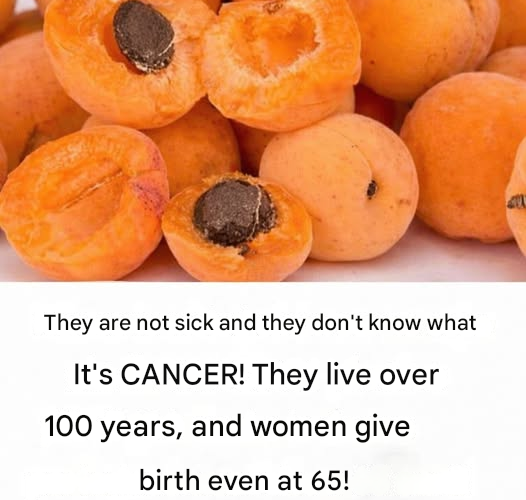
You’re surely referring to the (very fascinating, but partly fictional) myth of the Hunza people, who live in a remote valley in the mountains of Pakistan.
The “miracle fruit” referred to in these stories is the apricot.
The myth of the Hunza and apricots
According to popular belief, this population is immune to cancer and lives incredibly long thanks to their massive consumption of apricots, eaten fresh in the summer and dried in the winter. But the real star of the scientific debate is the seed (or almond) contained in the pit.
The “Vitamin B17” theory
Apricot kernels contain amygdalin, a substance that some people incorrectly call “Vitamin B17.”
The proponents’ thesis: Amygdalin releases cyanide only inside tumor cells, destroying them.
The scientific reality: There is no clinical evidence that amygdalin cures cancer. On the contrary, excessive consumption of apricot kernels can cause serious cyanide poisoning, as the body does not distinguish between healthy and diseased cells when processing this substance.
What’s true about their health?
While it’s true that the Hunza people have historically enjoyed excellent health, the secret isn’t a single magical fruit, but a lifestyle that we’ve almost forgotten today:
Natural calorie restriction: Living in a harsh environment, they eat only what they grow, without excess.
Constant physical activity: Farming on steep terrain at thousands of meters above sea level keeps the cardiovascular system strong.
No processed foods: No refined sugars, preservatives, or hydrogenated fats.
“Living” water: They drink glacier water, rich in minerals.
A note of caution: The story of women giving birth at 65 is more folklore than documented biology. Often, in these isolated communities, there were no official registry offices, making it difficult to verify their actual age.
In conclusion
Apricots are extraordinary fruits, rich in beta-carotene (excellent for skin and vision) and potassium, but they are not a miracle cure. Eating them is very good for you, but it’s best not to trust your health to the seeds alone!
Are you interested in knowing the real risks associated with consuming apricot seeds, or would you prefer to learn more about other foods linked to longevity (such as those from the “Blue Zones”)?