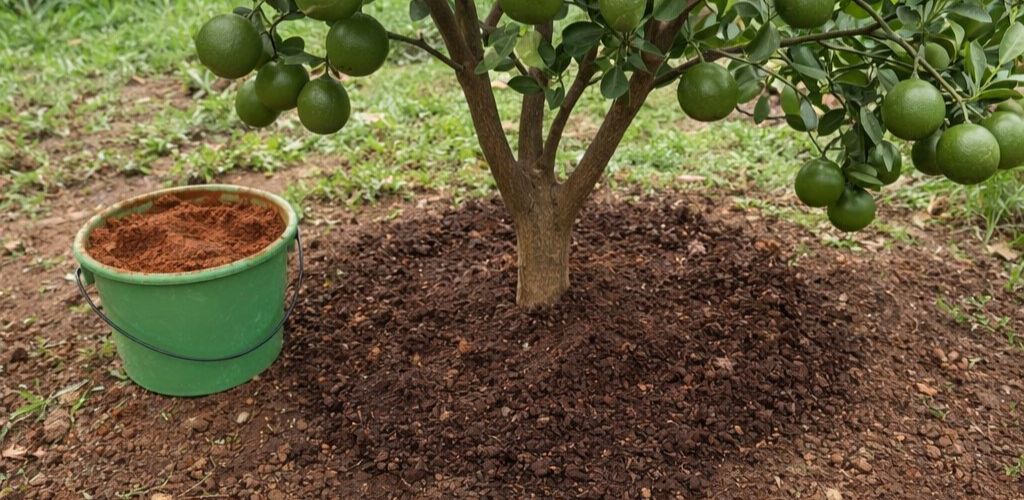
If you are lucky enough that your lemon tree is struggling with an “inadequate harvest” (or you would like to achieve one), the key is not only water, but also the right ratio of nitrogen, potassium and especially iron. Lemon trees are “hungry” plants and regular soil will quickly become insufficient for them.
The best natural fertilizer that activates flowering and keeps the fruits on the branches is probably in your kitchen.
- Coffee grounds: Nitrogen bomb
Lemon trees love slightly acidic soil and nitrogen for leaf growth.
How to do it: Once a month, work 2-3 tablespoons of dried coffee grounds into the top of the soil.
Bonus: Coffee releases nutrients gradually and slightly acidifies the substrate, making it easier for the plant to draw in additional minerals.
- Eggshells: A storehouse of calcium
To prevent premature leaf drop and keep the skin firm, lemons need calcium.
How to do it: Dry the shells, grind them into a fine powder, and sprinkle them around the trunk. A decoction works even better (leave the shells in water for 24 hours, then pour it over the plant).
- “Potassium tea” from banana peels
Potassium is responsible for the size and sweetness of the fruit.
How to do it: Cut the peel from one banana, pour it into a liter of water, and let it steep for 48 hours. Water the lemon tree with this water. It is the best starter for flowering.
Secret weapon: Epsom salt (bitter salt)
If the leaves of your lemon tree turn yellow but the veins remain green, the plant lacks magnesium. Without it, it cannot maintain a large harvest.
Formula: 1 tablespoon of Epsom salt per 4 liters of water.
Application: Once a month during spring and summer. You will see that the leaves will immediately become greener and the flowers stronger.
3 tips for keeping the fruit on the tree
Many growers have the problem that the lemon tree blooms, but the small fruits immediately fall off. Here is help:
Enough light: The lemon tree needs at least 8-12 hours of light. If you have it inside in winter, put it near the brightest window.
Pollination: If you grow it indoors, where there are no insects, take a small brush and gently go over the centers of the flowers to spread the pollen. Without pollination, there will be no fruit.
Air humidity: The lemon tree hates dry air from radiators. It grows every other day with a spray bottle with settled water.
Interesting fact: If you have a lemon tree outside and want it to bear fruit like in the advertisement, some old gardeners recommend burying an old rusty nail near the roots. Iron is essential for lemon trees, and rust naturally releases it into the soil.
Do you grow your lemon tree in a pot indoors or out in the garden during the summer? This fundamentally changes the way you should water it.