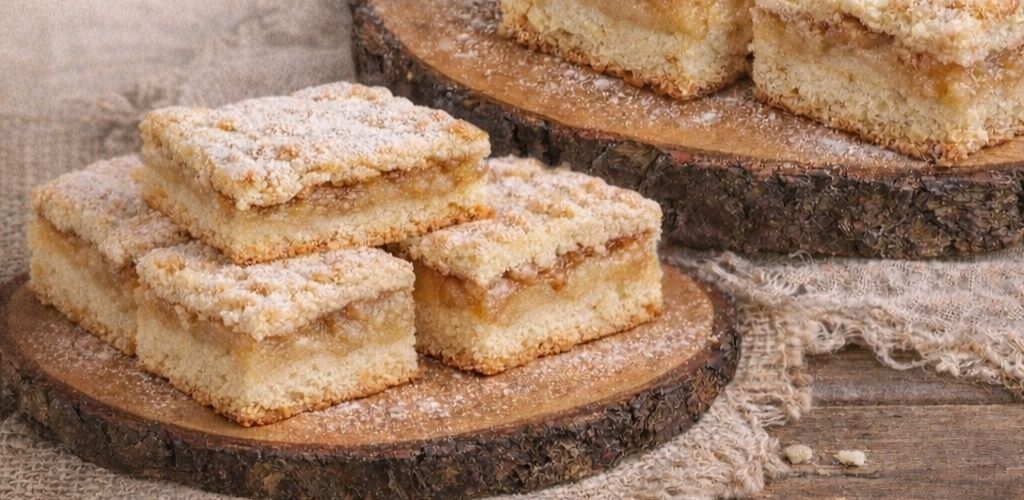
This is the absolute crown jewel of winter baking. The Linzer Apple Cake (or Linzer Apfeltorte) combines that “luxurious delicate taste” you love with the classic nutty aroma of a traditional Linz dough.
Unlike a standard pie crust, Linz dough is a shortcrust enriched with ground nuts (usually walnuts or hazelnuts), making it melt-in-the-mouth and fragrant.
The 4-Ingredient “Shortcut” Logic
While a traditional Linz dough has many spices, you can achieve that “instant good mood” flavor with just 4 main components for the base:
- Butter: Cold and cubed for that “short” flaky texture.
- Flour: Mixed with ground nuts (the nuts replace some flour for a more delicate crumb).
- Sugar: Powdered sugar works best for a silky finish.
- Apples: Sliced into those thin apple rings we’ve been discussing.
Easy Preparation: The “Press-In” Method
Traditional Linz cakes feature a lattice top, but for an easy, delicate version, we use the “shingled apple” look:
- The Dough: Rub the butter into the flour, ground nuts, and sugar until it looks like breadcrumbs. Press 2/3 of the mixture into the bottom of a tart tin. (No rolling required!).
- The Apple Rings: Peel and core your apples. Slice them into rings and toss them with a little lemon or cinnamon.
- The Layering: Arrange the apple rings in a beautiful, overlapping spiral over the base.
- The Topping: Sprinkle the remaining dough crumbs over the top (like a streusel) or create simple “meter-long” strips to lay across.
Why it’s the Perfect Winter Slice
- The Nut & Cream Connection: The ground nuts in the crust provide the “earthiness,” and serving it with a dollop of lightly whipped cream creates that classic contrast.
- The “Mood” Factor: As the nuts toast in the oven alongside the simmering apples, your entire home will smell like a high-end European bakery.
- The Texture: Because it’s a shortcrust, it’s not chewy or bready—it’s tender and delicate, snapping perfectly under a fork.
A Final Tip for the “Luxurious” Finish
Before serving, dust the cake heavily with powdered sugar. It settles into the crevices of the apple rings and makes the golden crust pop.