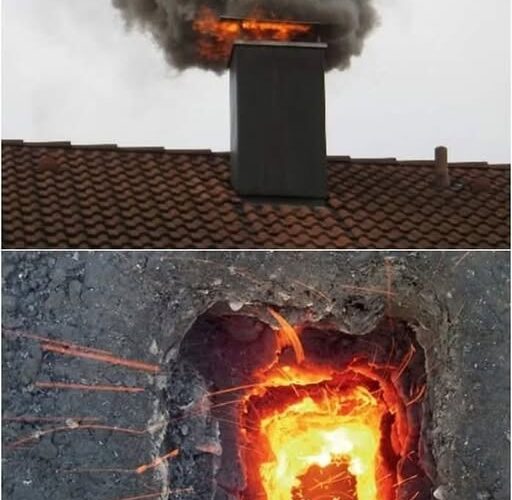
Can you imagine that a simple soot deposit in the chimney can cause a fire? It turns out that this is quite common.
After all, soot, which is 98% carbon, is almost indistinguishable from coal. Let’s see how this happens.
Imagine a scenario: you haven’t cleaned the chimney of your stove or boiler for a while and you notice that the draft has become weaker.
This is the first sign that carbon deposits have reduced the flow of flue gases. To increase the draft, the ashtray and the shutter are opened, and this is where the problem begins.
As the oxygen level in the chimney rises, the temperature rises sharply, and the carbon particles trapped by the increased airflow cause the soot to ignite, which can go unnoticed.
The first signs of an impending problem are often a roaring sound heard in the chimney and sparks flying from the flue.
Speaking of the physics of the process, it should be noted that the combustion temperature of soot exceeds 1200°C, which can destroy the chimney flue and potentially ignite surrounding materials.
For example, in one case described on social media, soot in a fiber cement pipe ignited while the homeowner was away, causing an explosion and destroying the pipe.
The first thing to do to prevent such situations is to cut off the oxygen supply to the combustion chamber.
If you are not sure about the fire safety of your home, it is best to call an ambulance. Trying to put out a fire yourself can be dangerous.
Regular chimney cleaning will help prevent such incidents. There is no need for complex mechanical methods. Chemical cleaning is a modern and practical method.
For example, you can use a special product called AURA, which you can add to the flame each time you light it. This will improve air circulation and eliminate unpleasant odors.