The Christmas cactus is a popular houseplant that, unlike common cacti, is native to the Brazilian rainforest. It appreciates a humid environment, diffused light and soft soil, and under the right conditions rewards you with beautiful flowers every winter.
✂️ Pruning Christmas Cactus
Why prune or pinch?
Promotes the growth of more lush branches and inflorescences
Maintains a compact and decorative shape
Helps the plant regenerate and rejuvenate
You will obtain cuttings for propagation
When to prune?
The best time is after flowering, usually from January to March. Avoid pruning during the budding or flowering period.
How to prune/pinch correctly?
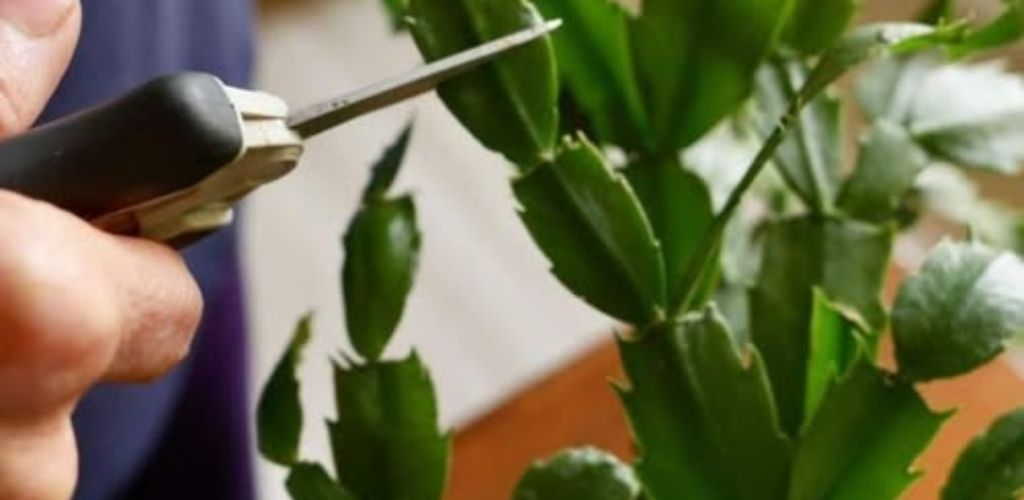
Do not use scissors – the branches will break or separate by hand at the natural split point. Find the point where two branches meet and gently twist them to separate them.
Remove no more than 1/3 of the plant at a time.
Choose mainly the most developed ends, weak branches and branches with unwanted growth.
➡️ The removed parts can be used immediately for propagation – let them dry for about 24 hours, then plant in a well-ventilated substrate.
🌿 Christmas cactus care all year round
📌 Light and location
Loves diffused light – an east or northeast-facing window is ideal. Avoid direct sunlight in summer. Can be kept outside in the shade in summer.
💧 Watering
Water moderately and regularly. The substrate should be moist but not soggy. Use filtered or distilled water.
🌡️ Temperature
Ideal temperature: 15–22 °C. The cool, dark period of autumn is suitable for starting flowering (approx. 6–8 weeks).
🌱 Substrate and transplanting
A light, airy and permeable substrate is ideal (e.g. succulent mix + peat moss + perlite). Transplant every 2-3 years, preferably in spring.
💮 How to promote abundant flowering
Short-day autumn – approx. 12-14 hours of darkness
Cooler environment – 12-15 °C
Do not rotate or move buds during flowering period
Fertilize in spring and late summer with a fertilizer for flowering plants
Most common problems
Problem Cause Solution
Falling blood buds Movement, drafts, sudden temperature changes Do not move the cactus and provide stable conditions
Yellowing of cells Waterlogging, heavy soil Reduce watering, repot
Poor growth Lack of light Move to a brighter place
Not flowering Missing the cool, dark period Try the autumn regime
Summary
Gentle and regular pruning after flowering, moderate watering, adequate light and autumn stimulation will make a beautifully flowering and long-lived plant that can live for decades.
We wish you health and prosperity with herbs! 🌿
If you liked this tip, save it and share it with your friends – this way you will also help spread folk medicine and a healthy lifestyle. 💚