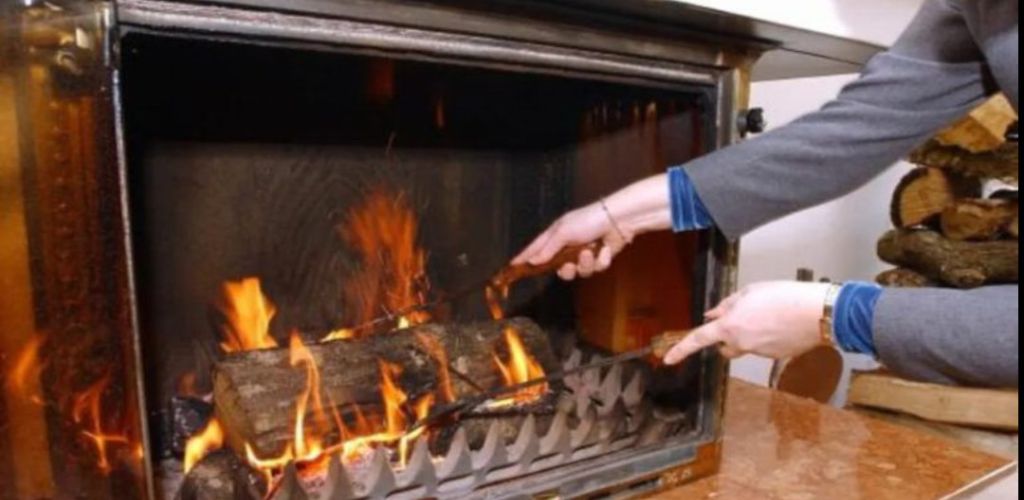
Keeping the fire or embers burning in your fireplace or wood stove all night is a common goal for fireplace owners. The chimney sweep’s tip focuses on safety, efficiency, and preventing smoldering (creosote buildup).
Here’s the recommended procedure to ensure a long-lasting and safe fire:
- High-quality fuel is essential
The most important factor for a long burn time is the fuel itself.
Use hardwood: Use hardwoods such as beech, oak, or ash. These types of wood have a higher density and burn significantly slower and longer than softer woods (such as spruce or pine).
Dryness: The wood must be sufficiently dry (residual moisture content below 20%, ideally around 15%). Damp wood burns poorly, releases a lot of smoke and pollutants, and leads to increased soot buildup in the chimney (creosote), which increases the risk of a chimney fire.
- 🔥 Prepare the embers
A good, thick bed of embers is the foundation for a long-lasting fire.
Burden the fire: Heat the stove thoroughly in the evening to build up a large amount of healthy, hot embers.
Leave the ash: Don’t remove all the ash before adding the last logs, as a layer of ash helps retain heat in the embers for longer.
- 🛡️ Add and stack large logs correctly
To achieve slow combustion, you need large pieces of fuel.
Large, thick logs: Add the largest logs that will still fit in the firebox without overloading it.
Stack the logs: Stack them so they are close together, but not too tightly packed, allowing oxygen to circulate (some recommend a north-south orientation, depending on the stove model).
Briquettes: Alternatively, you can use special, long-lasting wood briquettes designed for very even and long-lasting heat output (often burning for 6 to 8 hours).
- 💨 Reduce air supply to a minimum
This is the real trick to slowing down combustion; the oxygen supply must be reduced.
Wait until the wood “gasses”: Wait until the large logs are well lit and you no longer see large, bright flames, but rather a steady, darker flame and plenty of embers.
Close the air: Then reduce the primary air supply (the air from below) almost completely and also close the secondary air supply (air from above/back) significantly, but never completely!
Important: There must always be enough oxygen present for the fire to glow in a controlled manner and not just smolder (smoldering fire). A smoldering fire (incomplete combustion) releases an extremely large amount of soot (creosote), which can clog the chimney and cause a fire, as well as dangerous carbon monoxide.
Summary of the chimney sweep’s tip:
Maintaining embers overnight is achieved by combining hard, dry wood with reducing the air supply to the absolute minimum to ensure slow but clean combustion and prevent the formation of a smoldering fire.