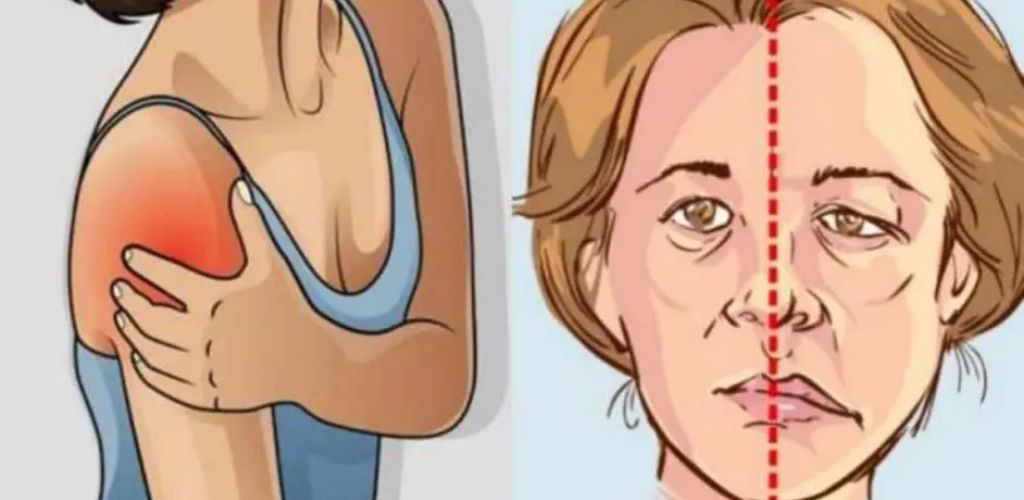
Stroke (cerebrovascular accident) is an acute condition in which the blood supply to the brain is suddenly interrupted (most often by a blockage of a blood vessel) or bleeding. Early recognition of symptoms and immediate response are key to saving lives and minimizing permanent consequences. The rule applies: Time is brain!
A simple mnemonic FAST is used to recognize the main, suddenly occurring symptoms:
- F – Face
Symptom: Sudden asymmetry of the face, drooping corner of the mouth, drooping eyelid.
Test: Ask the person to smile or show their teeth. If one corner of the face droops or they cannot move one side of the face, the test is positive. - A – Arm
Symptom: Sudden weakness, numbness, or paralysis of a limb, usually on one side of the body.
Test: Ask the person to raise both arms and hold them at the same height for 10 seconds (with eyes closed). If one arm drops or twists, the test is positive. - S – Speech
Symptom: Sudden speech disorder – slurred (slurred/garbled), confused speech, inability to find the right words, or inability to understand speech.
Test: Ask the person to repeat a simple sentence. If the speech is slurred, unintelligible, or the person is unable to repeat the sentence, the test is positive. - T – Time
Key step: If any of the above symptoms are positive, IMMEDIATELY CALL EMERGENCY SERVICES (155 or 112).
State that you suspect a stroke and try to determine as precisely as possible when the symptoms began.
Other, less common but serious warning signs:
Visual disturbances: Sudden blurred vision, double vision or partial/complete loss of vision in one eye.
Balance and dizziness disorders: Sudden severe dizziness, loss of balance or poor coordination of walking, which can lead to a fall.
Sudden severe headache: Pain that is described as “the worst of your life” and is often associated with nausea or vomiting (especially typical of brain hemorrhage).
Confusion: Sudden disorientation, memory loss or change in behavior.
What to do when the symptoms disappear?
If the symptoms appear and disappear on their own within a few minutes, it could be a transient ischemic attack (TIA) or “mini-stroke”. A TIA is a very strong warning sign that a real stroke is imminent, and you should seek medical attention immediately! Don’t wait for the problem to reoccur.
First aid until the ambulance arrives:
Keep calm and ensure that the victim is lying or sitting in a safe, stable position.
Open the airway (untie the collar, belt).
If the victim is vomiting or unconscious, place them in the recovery position on their side.
Never give the victim anything to eat, drink or take any medication (not even for a headache!), as they may have trouble swallowing.